Founders sit on collection ideas for months. They sketch in Notes app. They make Pinterest boards at 2am. Then they finally try to make the thing, and that is where it falls apart. Most clothing brands die in the gap between idea and shelf. The clothing manufacturing process sounds simple enough. Sketch, sample, produce, ship. But inside the factory each of those step’s splits into fifteen smaller steps, and every one of them can blow up the timeline. Trying to start a clothing brand in 2026 without a sharp production partner can stretch your launch past a year. Cord Apparel exists to cut that down.
Where Months Get Lost
Speed is not optional. You need to catch the trend, fund the next collection, and pay rent before your runway disappears. Most startups bleed time on the same things.
- Chasing manufacturers who never reply
- No tech specs, so factories quote based on a mood board.
- Fabric sourcing that goes in circles
- Sampling rounds dragging on for six weeks each.
- Communication going dark mid-production.
Anyone trying to start a clothing brand today is running against influencer cycles, drop fatigue, and an audience with the attention span of a TikTok scroll. Production delays kill more first collections than bad designs ever do.
Step 1: Sharpening a Vague Idea

A vague brief gets you vague samples. That simple.
You need four things locked before anything moves: product type, target customer, design references, and rough quantity. A streetwear founder in Brooklyn making 400 GSM heavyweight hoodies for college kids is solving a completely different problem than someone in Florida making French terry sets for yoga moms. Both can sell. They just need different everything.
“Skip this and you will pay for samples that miss your whole point.”
Step 2: Tech Packs That Stop the Guessing

A tech pack is the document that tells the factory exactly what to build. Measurements. Materials. Stitch type. Trim placement. Logo position. All of it down to the millimeter.
Without one, the factory guesses. And factory guesses are why brands end up with sleeves two inches too long across a whole 500-unit run.
When founders do not have one, our tech pack team builds it from scratch. The single most underrated step in the whole apparel manufacturing process. Saves you weeks of back-and-forth and a lot of money on bad samples.
Step 3: Fabric Without the Roulette
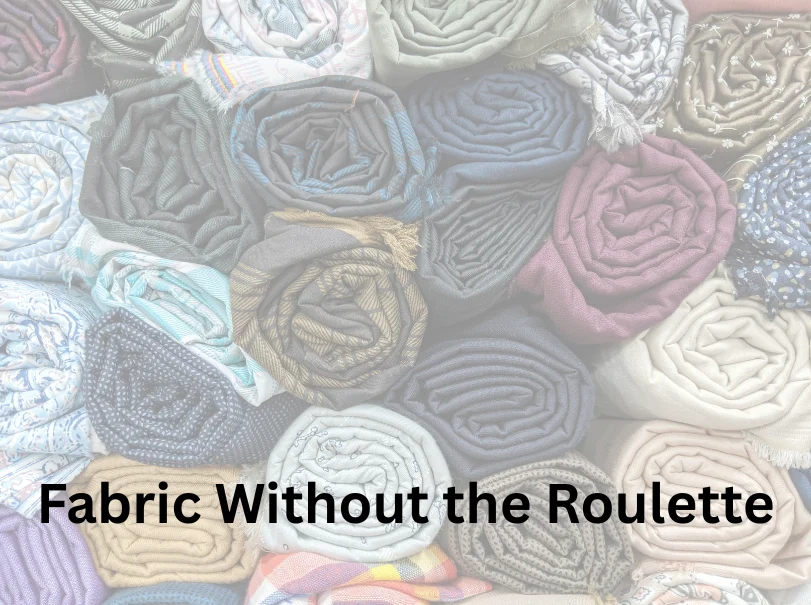
Fabric is where comfort, cost, and durability either play nice together or eat each other alive. Cotton. Cotton-poly. Fleece. French terry. Modal. Nylon ripstop. Each one feels different, shrinks differently, costs different.
What works for a Los Angeles activewear startup will not work for a Texas streetwear label. The breakdown on streetwear fabric options is worth a read if you are still picking. It walks through what urban brands run and how those fabrics hold up after fifteen washes.
“We have been working with the same mills for years. That cuts out two months of new factories evaluating six suppliers and finding nothing.”
Step 4: Sampling, the Step People Try to Skip
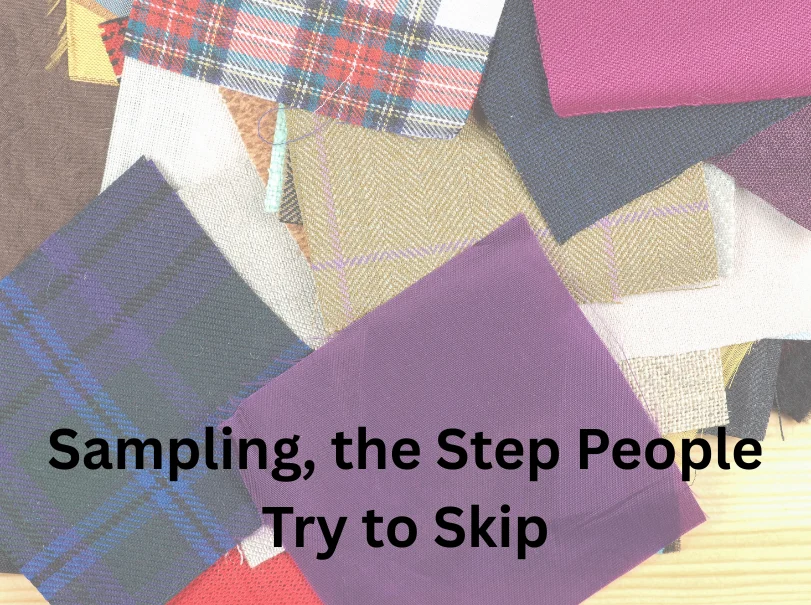
Sampling is the safety net. Two rounds, usually. First round is fit. Second is the real thing, with the final fabric and trims and prints.
Founders who try to save two weeks here lose two months later when bulk shows up wrong. No way around it.
Smart samples catch the small stuff before it scales. Wrong thread tone. Neck rib a little off. Sleeve length half an inch short. Easy fixes at sample stage. Brand-ending disasters at bulk stage.
Step 5: Production on a Calendar You Can See
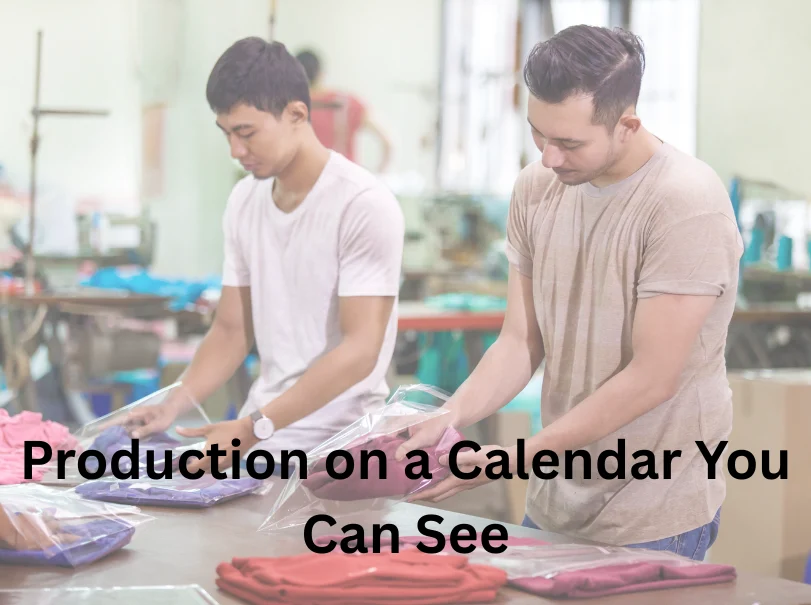
Once samples are signed off, production runs in a predictable order. Fabric gets washed and dyed. Patterns are graded across sizes. Cutting happens in stacked layers. Stitching runs on dedicated lines. Printing and embroidery slot in at their stages. Then trim, press, pack.
Our cut and sew floor works off production calendars founders can see. No mystery about what week you are in. No “we’ll get back to you” when you ask about progress.
“Standard industry pace is 60 to 90 days. When the front end is clean, we hit the lower end of that.”
Step 6: Catching Defects Before They Multiply
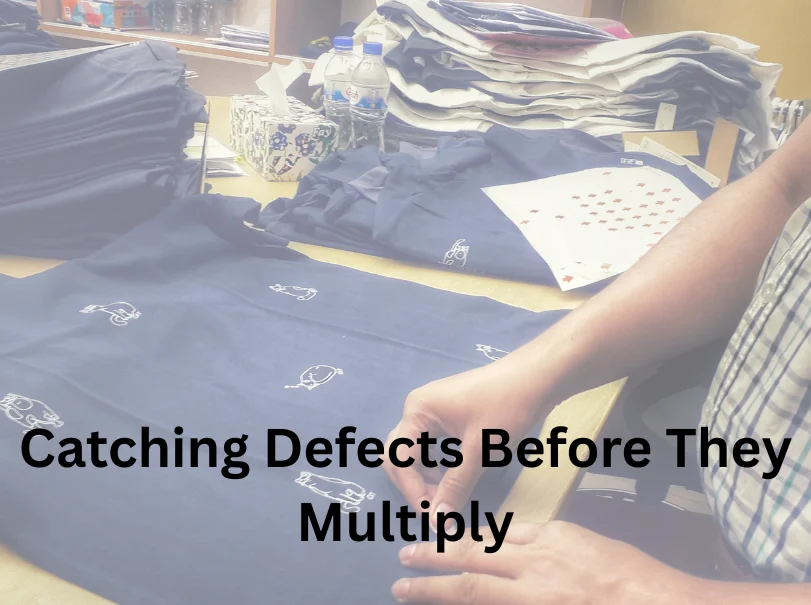
Quality gets checked at four points, not one. Raw fabric inspection. Inline checks during stitching. Print accuracy after customization. Final AQL before packing.
Catch a defect at the fabric stage and it costs nothing. Catch it after packing and you have lost the whole order. That is why we layer it.
Step 7: Logistics, the Last Place Things Break
The last mile is where timelines either hold or fall apart. Domestic US shipping is quick. Sea freight from overseas adds four to six weeks. Air freight is fast clothing manufacturing but eats your margin alive.
The MOQ you picked also changes the shipping math. A 100-unit order ships differently than a 5,000-unit order. Founders who ignore that part wreck their budgets at the finish line.
“We coordinate freight in-house, so you are not chasing forwarders the week before launch.”
How Cord Apparel Pulls It All Tighter
We built the whole thing to kill the dead zones that slow startups down.
One point of contact who knows your order. Tech pack help when specs are missing. Mills we have worked with for years. Tight sampling rounds. Production calendars upfront. QC at every layer. Coordination under our roof. Cut and sew, sampling, print, pack, all in one place, not three vendors blaming each other on email. Not to mention, how smooth their entire private label clothing manufacturing process is.
“What is usually a nine-month nightmare turns into four or five months when the workflow holds together.”
Why Full-Service Beats Multi-Vendor
Splitting production across separate vendors looks cheaper on paper. It almost never works out that way. Coordination loss eats your savings, and every handoff is one more place something can go wrong.
A startup sourcing streetwear fabric from one mill, cutting at another factory, printing at a third, shipping through a fourth, is signing up for headaches no spreadsheet will save them from. One partner means one timeline, one team, one quality standard. Clean MOQ terms, lead times you can plan around, and a workflow that holds together end to end is what gets brands to market on time.
Realistic Timeline from Idea to Launch
What a focused project looks like:
| Stage | Timeline |
|---|---|
| Concept and design lock | 1 to 2 weeks |
| Specs and tech docs | 1 week |
| Fabric sourcing | 1 to 2 weeks |
| Sampling (two rounds) | 2 to 4 weeks |
| Bulk production | 4 to 6 weeks |
| QC and finishing | 1 week |
| Shipping (domestic US) | 1 to 2 weeks |
| Shipping (overseas sea) | 4 to 6 weeks |
That is the shape of it. Brands that try to compress by skipping stages do not save time. They just move the delay to a worse part of the cycle.
Final Word
An idea is not a product until it is built, shipped, and in someone’s hand. Everything between those two points is where you win or lose. Get the production partner right and the timeline shrinks. Get it wrong and your first collection becomes your last. That is the make-or-break decision when searching for a startup clothing manufacturer.

Leave a Reply