So, here is the thing nobody tells you when you decide to start a clothing brand. You think “t-shirts, easy, everyone wears them.” Then you sit down to spec your first run and realize there are maybe ten different types of t-shirts and each one is a slightly different garment, and the customer for a 240 GSM boxy crew is not the customer for a slim-fit modal V-neck, and suddenly you’re making decisions that affect everything from your retail price to whether your brand reads streetwear or premium or athletic. Picking the wrong t-shirt for your audience is one of those quiet expensive mistakes nobody warns you about. Talking to actual t-shirt manufacturers before you spec helps. So does looking at your clothing brand startup cost projections with the t-shirt category as a line item that can swing wildly depending on what you build.
Why Bother Caring About Types of T-Shirts
Look, a brand selling boxy oversized tees with weird graphics to 19-year-old guys on TikTok is not running the same business as a brand selling slim-fit Pima cotton crews to women who shop at COS. The product looks adjacent in a catalo photo. The actual customers do not overlap. Your t-shirt — the fit, the neckline, the weight, the way it photographs — does a lot of the work telling people whether you are for them. Seasonally? Lightweight summer tees and heavyweight layering tees are not interchangeable. Both exist. Both have customers. Your brand needs both eventually.
Crew Necks
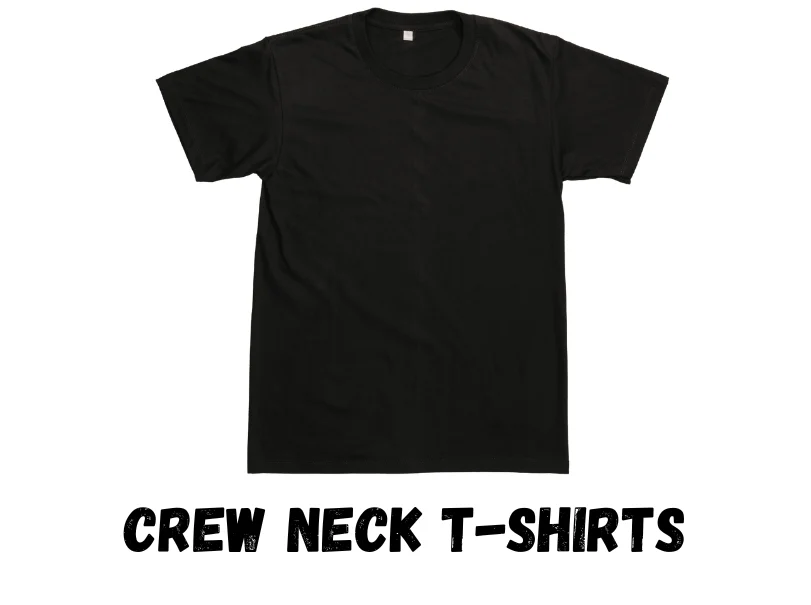
The boring answer. Round neckline. Sits everywhere. Every brand you can think of sells crew necks because they are the safest bet across the widest customer base, which is exactly what makes them simultaneously the most important and the most underspecified product in most catalogues. They are cheap to make. They are versatile. You can do a lot to them or nothing.
V-Necks
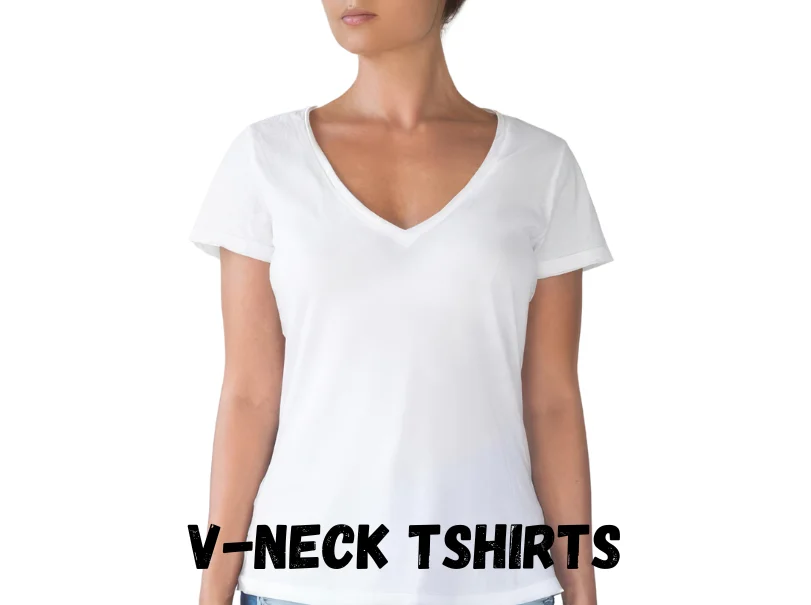
Had a moment in 2012. Less so now. The V-neck reads slightly older, slightly more “I’m dressing intentionally” than a crew, which is great if that is your customer and a bit weird if it is not. Production is a couple of cents more than a crew because of the bound V. It is one of the types of t shirts for brands wanting a retro touch.
Oversized
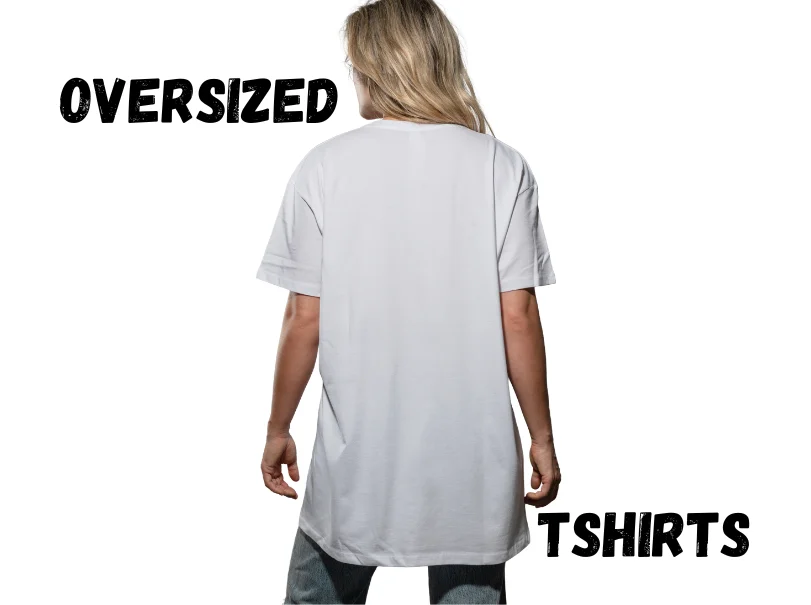
OK so oversized was niche streetwear five years ago and now it is just what most fashion-forward labels do. Drop shoulders, longer body, sleeves that almost cover the wrist. Uses more fabric, costs more per unit, sells at a higher retail price because the silhouette signals fashion-ness and customers pay for that. If you are a streetwear or contemporary fashion brand and you do not have an oversized tee in your range right now, I would genuinely ask why.
Slim Fit
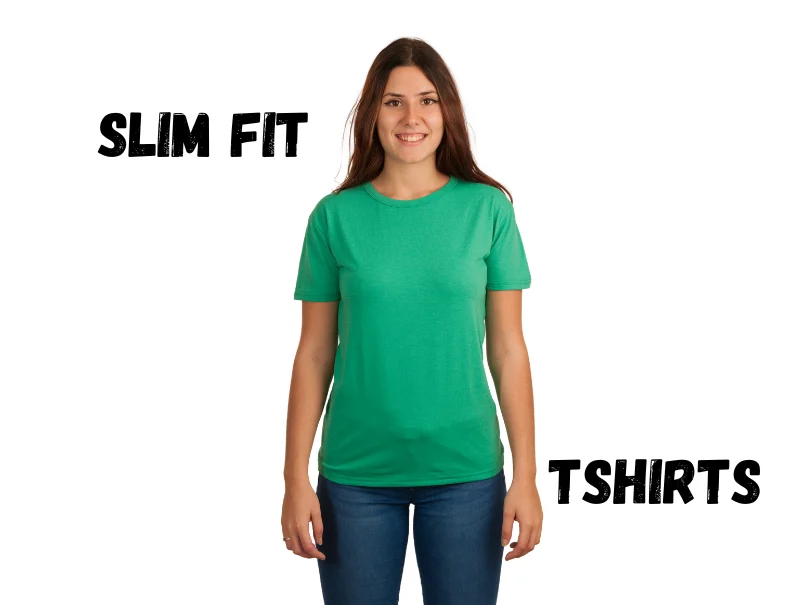
The opposite direction. Tapered through the torso, fitted sleeves, the shape of the body shows through. Less fabric per unit but the patternmaking is finicky because anything off shows immediately. Slim fit went out of fashion during the oversized era and is now creeping back, mostly in premium men’s t shirt styles and women’s brands that want a more polished look than a boxy tee gives.
Longline
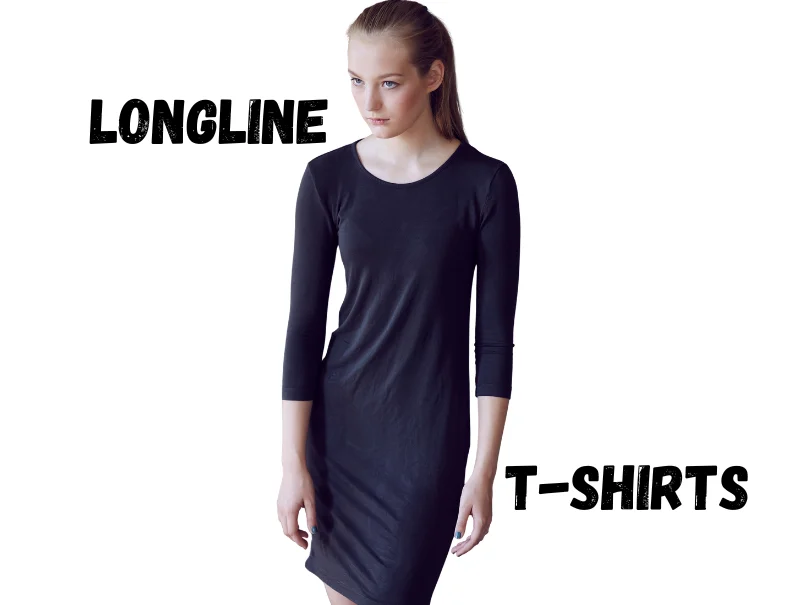
Extended hem, sometimes with side splits, designed to either layer or hang past the waistband on its own. Streetwear thing mostly. Looks intentional when it is cut right and like a sizing mistake when it is not.
Pocket Tees
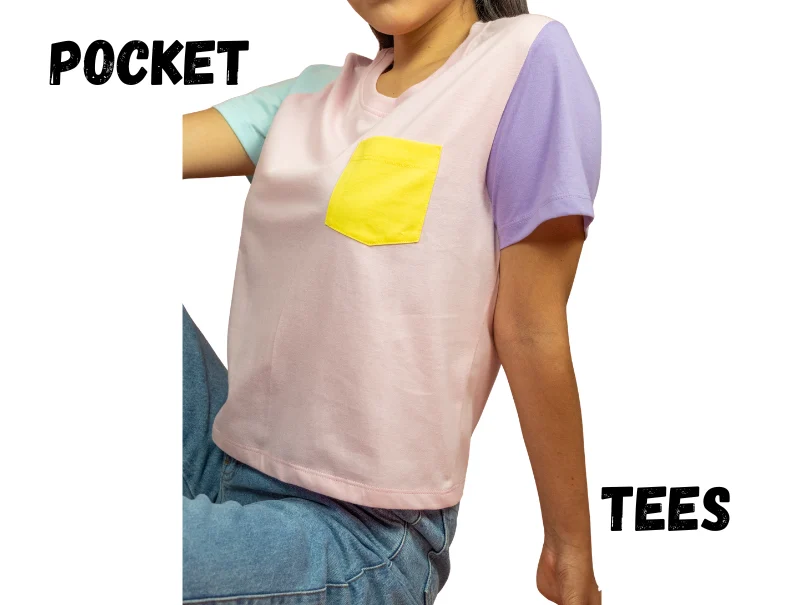
A chest pocket on a basic tee. Reads casual, slightly old-school, lifestyle-brand-y. Workwear-adjacent labels love them. Production cost barely moves — 20 cents per unit for the pocket itself.
Graphic Tees
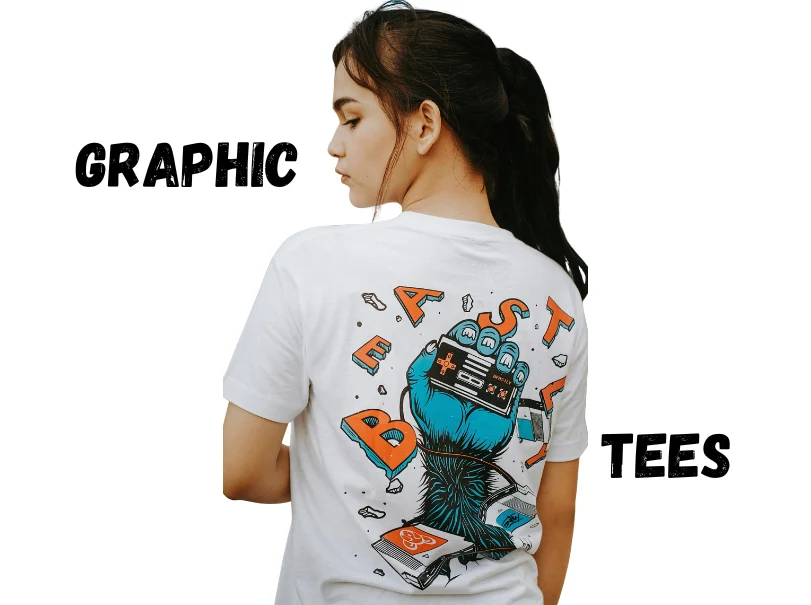
The biggest category by far if you measure it by what sells. Streetwear lives here. Merch lives here. Brands that do not sell anything else manage to build entire businesses on graphic tees. Customization gets interesting fast — screen printing is what most people use because it manages bold designs, survives wash cycles, and works on the cotton-heavy fabrics graphic tees usually run on. The math on screen printing comes down mostly to colour count and print size, so a one-color chest print is cheap, and a four-color full back is not. Sublimation and DTG are options too, but they are better for different things.
Performance Tees
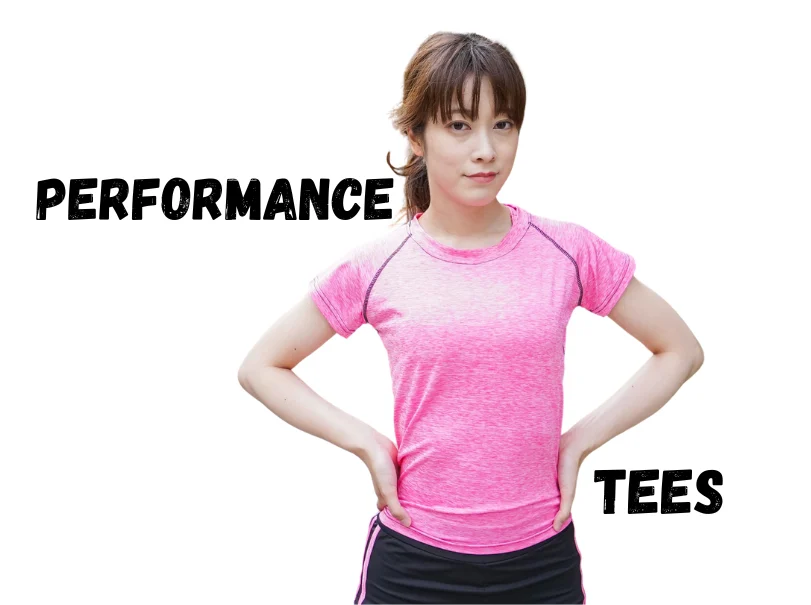
Different conversation entirely. Performance tees are polyester or poly-spandex with moisture-wicking, flatlock seams, four-way stretch — engineered to do something, not just to exist. Activewear brands and fitness labels run this category. Cotton tees are not really in the conversation here.
Types of T-Shirts vs Target Audience
| Types of T-Shirts | Primary Audience | Best Use Case |
|---|---|---|
| Crew Neck | Universal, all brand types | Basics, graphic streetwear, premium tees |
| V-Neck | Modern menswear, elevated basics | Slightly dressier collections |
| Oversized | Streetwear, fashion-forward labels | Bold graphics, premium positioning |
| Slim Fit | Premium menswear, women’s fashion | Style-conscious customers, fitted looks |
| Longline | Streetwear, layering-focused brands | Layered streetwear outfits |
| Lifestyle, Americana, workwear-adjacent | Casual everyday wear | |
| Graphic | Streetwear, merch brands | Branding, statement prints |
| Performance | Activewear, fitness brands | Gym, training, athletic use |
Fabric, Which Matters More Than You’d Think
Cotton because it is soft and breathable and ink sticks to it. Cotton-poly blends because they are cheaper and shrink less. Straight polyester for performance stuff. Organic cotton or modal blends if you are going premium and want to make claims about it.
The thing most brands miss is fabric weight. A 140 GSM cotton tee and a 240 GSM cotton tee are assorted products. Different feel, different drape, different durability, different retail price tolerance. Reading a real t-shirt fabrics guide before you commit to a spec is one of those trivial things that saves brands from launching a tee that looks fine in photos and feels cheap in person.
Picking the Right Mix for Your Brand
Four things to figure out:
- Who is the customer. Streetwear, athleisure, basics, premium, fitness — each has its dominant types of t-shirts.
- What price you are charging. That sets your fabric ceiling and construction budget.
- Whether you sell year-round. If yes, you need light and heavy options.
- Simple or differentiated. Crews scale fast. Custom t shirt styles do not.
A lot of the mistakes launching a clothing line happen right here in the t-shirt category because brands assume it is a simple product and skip the spec work. Looking at common mistakes launching a clothing line before you sample saves money, you would otherwise burn finding out the hard way.
Cord Apparel for T-Shirt Production
Cord Apparel works with brands across streetwear, athleisure, fashion, basics, and merch on t-shirt production from first sample through bulk runs. Heavyweight crews, oversized graphic tees, slim-fit premium basics, performance polyester for activewear — the whole spread. As t-shirt manufacturers supporting startups and scaling brands, the team manages fabric guidance, sample development, and the quality control work that is the difference between a tee program that launches well and one that does not.
The Real Point
A t-shirt is the simplest-looking thing in fashion and one of the easiest to get wrong. T shirt fits matter. Fabric weight matters. Neckline matters. The customization, the cut, the way it photographs — all of it. Brands that think hard about that match end up with collections that move. Brands that do not end up sitting on inventory. Anyone building a real clothing brand startup cost budget should treat the t-shirt category as a place that deserves more attention than its simple appearance suggests.

Leave a Reply