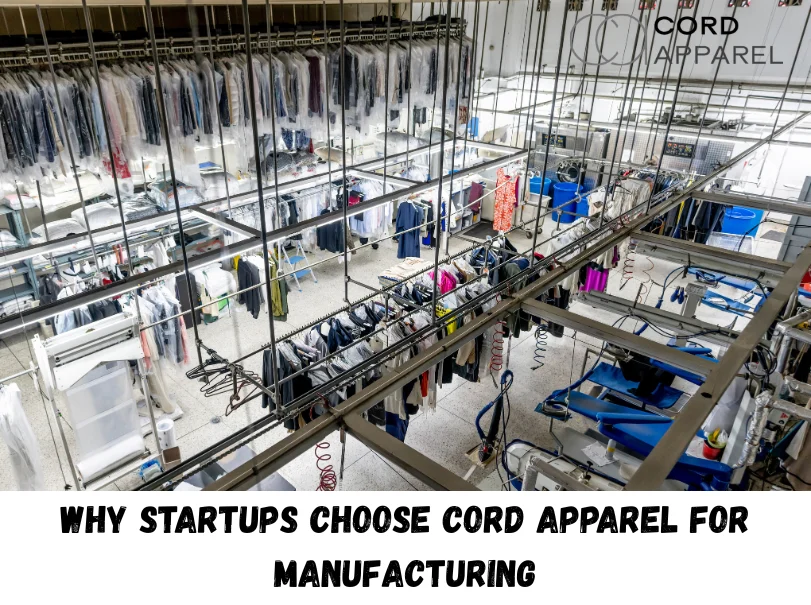
Every week, a new clothing brand launches out of someone’s apartment. The market has never been more crowded, and the bar for survival keeps climbing. Most of these brands die in their first eighteen months, always for the same reason. They picked the wrong factory. Cord Apparel built its custom apparel manufacturing model around that exact problem, which is why so many founders looking at the real startup cost of building a label end up at our door before their second sample.
The Manufacturing Wall Startups Hit First
Founders almost never fail at design. They fail at production. The wall hits early and it hits hard.
- High MOQs. A factory wants 1,000 units. The founder has cash for one hundred.
- No production knowledge. Tech packs, GSM, grading. None of it taught properly on YouTube.
- Manufacturers who ghost. A four-day reply window becomes two weeks. Drops slip.
- Quality that swings between batches. Sample looks fire. Bulk arrives looking different.
- Budgets blown on things the founder did not know to ask about.
Pick the wrong partner and the brand never reaches its second collection. That is most startups, and most of the mistakes launching a clothing line trace right back to manufacturing decisions made too quickly.
Low MOQs That Match Real Startup Math
Most factories run on volume. Startups do not have volume yet. That mismatch is where careers end before they start.
Cord Apparel runs from 50-100 units per style. That number matters more than founders realise. It lets a brand evaluate a drop without burning their entire runway on inventory. It lets them learn what sells before they bet bigger.
The full math on MOQ, why it exists, and how to negotiate it is broken down properly elsewhere on our blog. The condensed version is simple. Smaller runs cost more per unit, but they keep you alive long enough to find product-market fit. That is the trade most startup founders should be making.
End-to-End Support, Not Just Stitching
Most factories want a finished tech pack and clean specs. Startups usually have neither when they reach out.
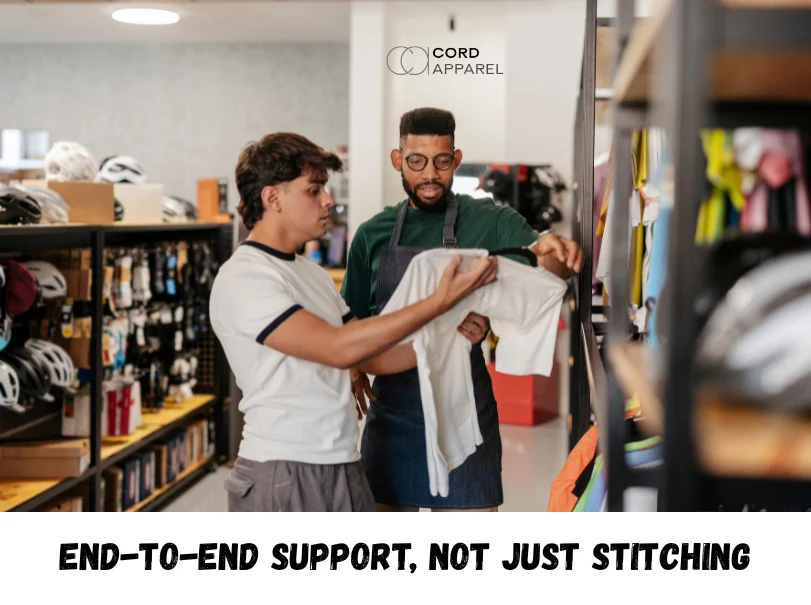
We collaborate with founders from sketch stage. Fabric sourcing. Pattern development. Sampling. Trim selection. The kind of guidance a senior product person at a bigger brand would give in-house. Most startups cannot afford that hire yet, so the factory fills the gap.
This is not handholding. It is making sure the first run does not collapse because nobody mentioned that 180 GSM cotton pills after three washes.
Production Quality That Holds Across Batches
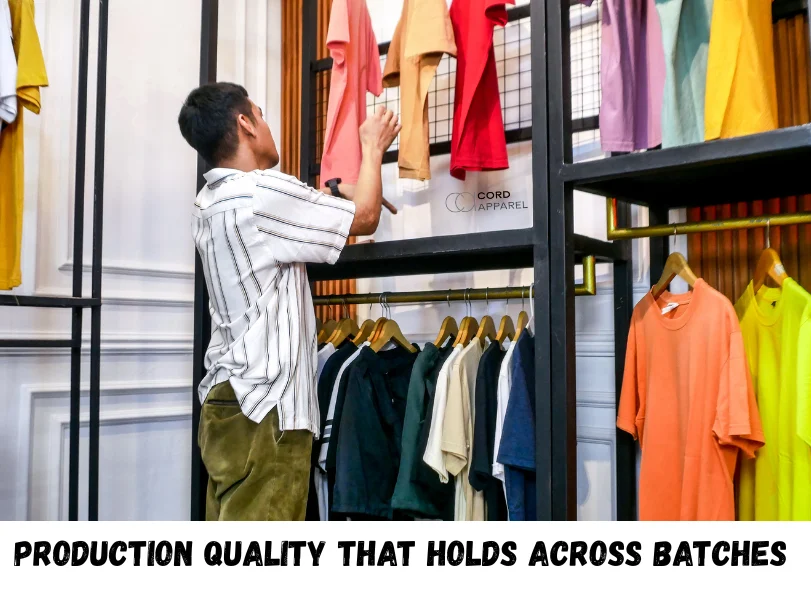
Quality consistency separates a real manufacturer from a sweatshop with a website. Anyone can hit quality on a sample. Hitting it on unit 47 of a 500-unit run is the actual test.
Our process runs checks at four points. Raw fabric inspection. Inline stitching review. Print and embroidery accuracy. Final AQL inspection before packing. Quality failures are the hidden startup cost most founders never plan for, and the one that ends brands fastest when returns start rolling in.
Customisation That Actually Builds Identity
Startups need their product to look like theirs, not like a generic blank with a logo. Customisation is how that happens.
We run screen printing, sublimation, puff prints, and embroidery in-house. Custom labels, woven tags, branded drawcords, printed inner necks, custom polybags. The full private label clothing manufacturer offering means a startup can launch a product that feels considered from hangtag to stitching.
For brands wanting full custom builds from scratch, our cut and sew manufacturer’s process supports patterns made specifically for them. No catalogue blanks. No shared silhouettes. Real product. That is what makes an ideal apparel manufacturer for startups.
Communication That Does Not Vanish Mid-Order
The most common startup complaint about factories is silence. You send an email Tuesday. You hear back the following Monday. Production runs blind.
We run on clear timelines, scheduled updates, and a single point of contact who knows your order. Production calendars get shared upfront. Sample feedback loops stay tight. If something goes wrong on the floor, the founder hears about it before it becomes a delivery problem.
For international founders running brands from outside the US, that responsiveness is the difference between a launch hitting the calendar and missing the season entirely.
Scaling Without Switching Factories
Most startups outgrow their first factory by year two. Then they spend six months finding a new one and another year getting it to match the old quality. That is twelve to eighteen months of stagnation right when momentum matters most.
Our production scales with the brand. A startup that starts at 50-100 units per style can move to 500, then 2,000, then 5,000 without leaving. Same fabric sources. Same QC standard. Same team. The MOQ flexibility is built in from the first run, which means the brand keeps the consistency customers notice as orders grow.
That continuity is worth real money, especially when a brand finally hits a moment and needs to triple production on short notice.
Built Around Startup Realities
Most factories were built for established brands placing predictable orders. Startups place unpredictable orders, change their minds mid-sample, and need to move faster than the traditional 90-day production cycle allows.
Cord Apparel was built for that messiness. We know founders pivot. We know designs shift after the first fit. We know launch dates get moved because an influencer campaign slipped.
The entire system is built to absorb that without breaking budget or quality. Most of the mistakes launching a clothing line that kill startups in year one come from factories that cannot adapt to that reality.
How the Process Simplifies for the Founder
A typical Cord Apparel project for a startup clothing manufacturer runs like this:
- Initial call to understand the brand and the product vision.
- Fabric and trim recommendations based on positioning and budget.
- Tech pack support or development if the founder needs help.
- Sampling with two refinement rounds
- Bulk production with checkpoint updates throughout
- Final inspection, packing, and shipping
No vendor juggling. No three separate factories for fabric, cut, and print. One partner, one timeline, one accountable team. Private label finishing, sampling, customisation, and packing all happen under one roof.
The Real Reason Startups Stay
Startups do not stay with a factory because the price is lowest. They stay because the relationship works. Because the factory picks up the phone. Because the quality holds. Because the team understands what the brand is trying to become, not just what it is producing this season.
The kind of cut and sew partner that lets a brand build past its second collection and into its third year is the kind worth keeping. Cord Apparel was designed for founders playing that longer game, not the ones chasing one quick drop.

Leave a Reply