Most brands do not think about fabric until something has already gone wrong. A shirt that pills after three washes. A hoodie that looked perfect on the model and feels like cardboard in your hands. Somewhere back there, a call got made too fast, or never really made at all, between cotton and polyester. The cotton vs polyester question looks simple from the outside. It is not. It quietly sets your cost structure, your return rate, whether someone reorders. Get a manufacturer in your corner who understands how these fibers behave once they are cut and sewn, not just how they read on a spec sheet, and the guesswork mostly disappears. That is the role Cord Apparel plays for the brands we work with as clothing manufacturers. So, let us get into what separates these two fabrics.
What Is Cotton Fabric?
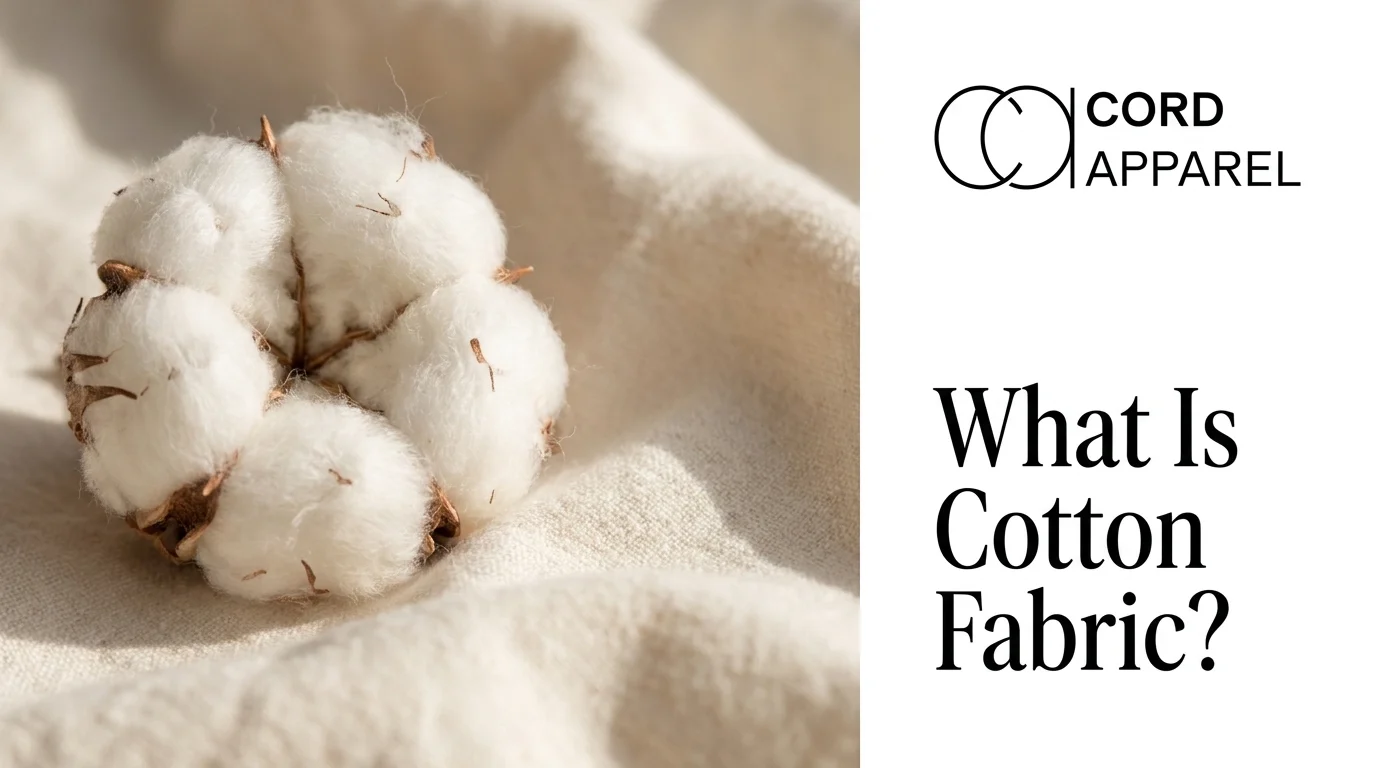
Cotton grows. That is the condensed version. Pulled from the plant, spun into yarn, woven or knit into cloth, it has been the go-to for casualwear for longer than anyone reading this has been alive. Ask why and the answer is boringly simple: it feels good on skin. Soft. Breathable. Forgiving when the fit is not perfect. That is really the whole case for cotton, and for tees, basics, anything sitting close to the body all day, it is a strong one.
What Is Polyester Fabric?
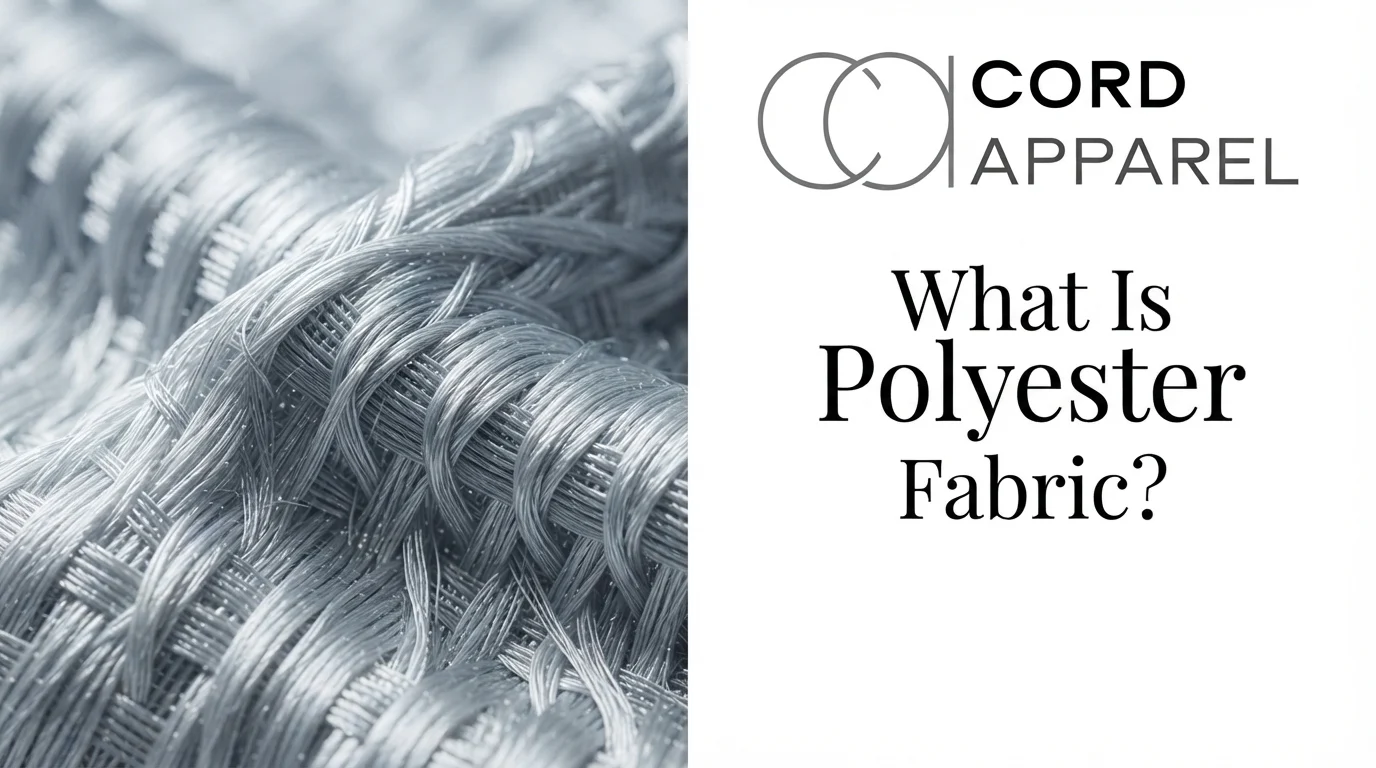
Polyester does not grow anywhere. It is built from petroleum-based polymers, which sounds clinical because it is, and that is the point. Being engineered instead of harvested means manufacturers get a level of control over stretch and finish that natural fiber rarely offers up on its own. Sportswear brands lean on it hard for exactly this reason. Under stress, it holds its shape. Cotton does not.
Cotton vs Polyester: Key Differences
A table will not capture everything about how these fabrics behave, but it is a quick way to see where they split.
| Factor | Cotton | Polyester |
|---|---|---|
| Breathability | High | Moderate to low |
| Durability | Moderate | High |
| Moisture absorption | Absorbs and holds | Wicks and dries fast |
| Comfort | Soft, natural feel | Lightweight, less breathable |
| Cost | Higher, variable by grade | Lower |
| Maintenance | Shrinks, wrinkles more | Holds shape, minimal maintenance |
Comfort and Wearability
Cotton wins comfort, no real argument there. It breathes. It is kind to skin. It gets better with washing instead of falling apart. Which explains why basics brands still build entire product lines around it, decades after synthetic options showed up promising to replace it.
Polyester is not chasing that same softness though. What you get instead is lighter weight and better structure, fabric that moves with the body in a way cotton just cannot keep up with. So, the comfort question is not really “which is better.” It is closer to: is this person getting dressed to sit at a desk, or to run five miles?
Durability and Longevity
Wash after wash, polyester shrugs. Resists shrinking, resists stretching, resists the wrinkles that show up on cotton by week two. Anything that needs to survive a gym bag or a season of hard rotation, polyester is doing the heavy lifting there.
Cotton wears down faster under the same conditions, though “wears down” is honestly the wrong frame. It softens. Breaks in. Plenty of premium basics brands have built entire marketing angles around that lived-in feel instead of treating it like a flaw.
Moisture Management and Performance
Polyester’s whole game. It wicks sweat off skin and dries fast, which barely matters at rest and matters enormously the second a garment starts doing real work. Cotton does the reverse: soaks moisture up, holds it, feels fine on the couch, and turns into a problem fifteen minutes into a run.
Building an activewear line? This one property will make the fabric decision before anything else even gets a say. Cord Apparel’s activewear and performance manufacturing work leans toward polyester or poly blends by default, and once you understand the moisture math, it is obvious why.
Cost and Production Considerations
Polyester runs cheaper at scale, and that difference shows up directly in your margin on bulk orders. Cotton’s pricing swings more depending on grade. Long-staple cotton in particular commands a real premium over standard versions. Neither one is objectively cheap nor expensive. What matters is whether the fiber cost lines up with where your product sits in the market. Put premium cotton into a budget collection and you are fighting your own numbers before a single unit ships.
Sustainability and Environmental Impact
Neither fabric gets to claim the clean win, whatever a hangtag might suggest. Cotton’s natural, biodegradable eventually, but conventional cotton farming drinks a genuinely alarming amount of water and often leans hard on pesticides too. Polyester skips the farmland and the irrigation, sure, but it is fossil fuel in origin, and it is not breaking down anytime soon, not on any timeline that matters to a landfill. Recycled polyester closes part of that gap. Worth a look if sustainability is something your brand talks about, not just something on the label.
Which Fabric Is Best for Your Brand?
Depends entirely on what you are making and who is buying it. No way around that.
- Streetwear and casual brands tend to land on cotton or cotton-heavy blends, chasing that lived-in feel
- Sportswear and gym wear require polyester, for the moisture control and shape retention alone
- Premium apparel usually calls for high-quality, long-staple cotton and its refined hand feel
- Budget-friendly collections lean on polyester blends to keep margin intact at volume
Blended Fabrics: The Best of Both Worlds
Cotton-poly blends have quietly taken over most of modern apparel production, and honestly, it makes sense once you look at what they are doing. You keep cotton’s breathability, add polyester’s durability, land somewhere in the middle on cost. Walk into any store and most of the tees and hoodies on the rack are some ratios of this blend. Not because blending is a trend. Because it just holds up across more situations than either fiber manages alone.
How Cord Apparel Helps Brands Choose the Right Fabric
Picking a fabric on paper is the easy part, honestly. Watching how it behaves once it is cut, sewn, and worn on a real body is where the decision gets made. Cord Apparel works alongside brands through product development and sampling, with enough fabric options on hand that nobody’s guessing off a swatch card. Producing tees, hoodies, or gym wear, that firsthand sampling guidance is usually what saves a brand from an expensive reprint six weeks later. We stay involved through quality checks across the full apparel production process, so what looked right in a meeting still performs right on the rack.
Common Mistakes Brands Make When Selecting Fabrics
Most fabric mistakes do not show up until the first bulk order ships, by which point they are expensive to fix. Running a proper fabric comparison cotton vs polyester before locking a spec sheet catch most of these before they become a reorder problem.
Chasing Price Over Performance
The cheapest fabric on a quote sheet often turns into the priciest one after returns start coming in. The difference between cotton and polyester in cost usually reflects a real difference in how the garment performs, not just margin.
Ignoring the End Use
Picking cotton for a product that needs to survive sweat and stretch, or polyester for something meant to sit soft against skin all day, is a mismatch that shows up in reviews within weeks.
Skipping a Real Cotton vs Polyester Clothing Comparison Before Committing to Bulk
A swatch under studio lighting tells a brand almost nothing about how a fabric washes, stretches, or holds color after real wear.
Assuming Blends Split the Difference Automatically
A blend ratio still needs to match the product. The wrong cotton-to-poly split can end up with none of cotton’s comfort and none of polyester’s durability.
Treating Fabric Choice as a One-time Decision
What worked for last year’s collection may not fit this year’s price point or customer expectations. Revisiting the best fabric for clothing brands at your specific stage keeps the decision current instead of inherited.
Working from a proper apparel fabric guide, rather than gut instinct or whatever a supplier happens to have on hand, is usually what separates brands that scale smoothly from ones stuck reworking a product line every season.
Conclusion
There is not one right answer to cotton vs polyester, and there never really was going to be. Cotton wins on comfort. Polyester wins on durability and performance. Let the product and the price point make the call, not habit or whatever is easiest to reorder. Get it right early and you are protecting comfort, durability, and cost all at once. A manufacturer who has watched this exact trade-off play out across hundreds of productions runs just makes the whole thing a lot less stressful.

Leave a Reply