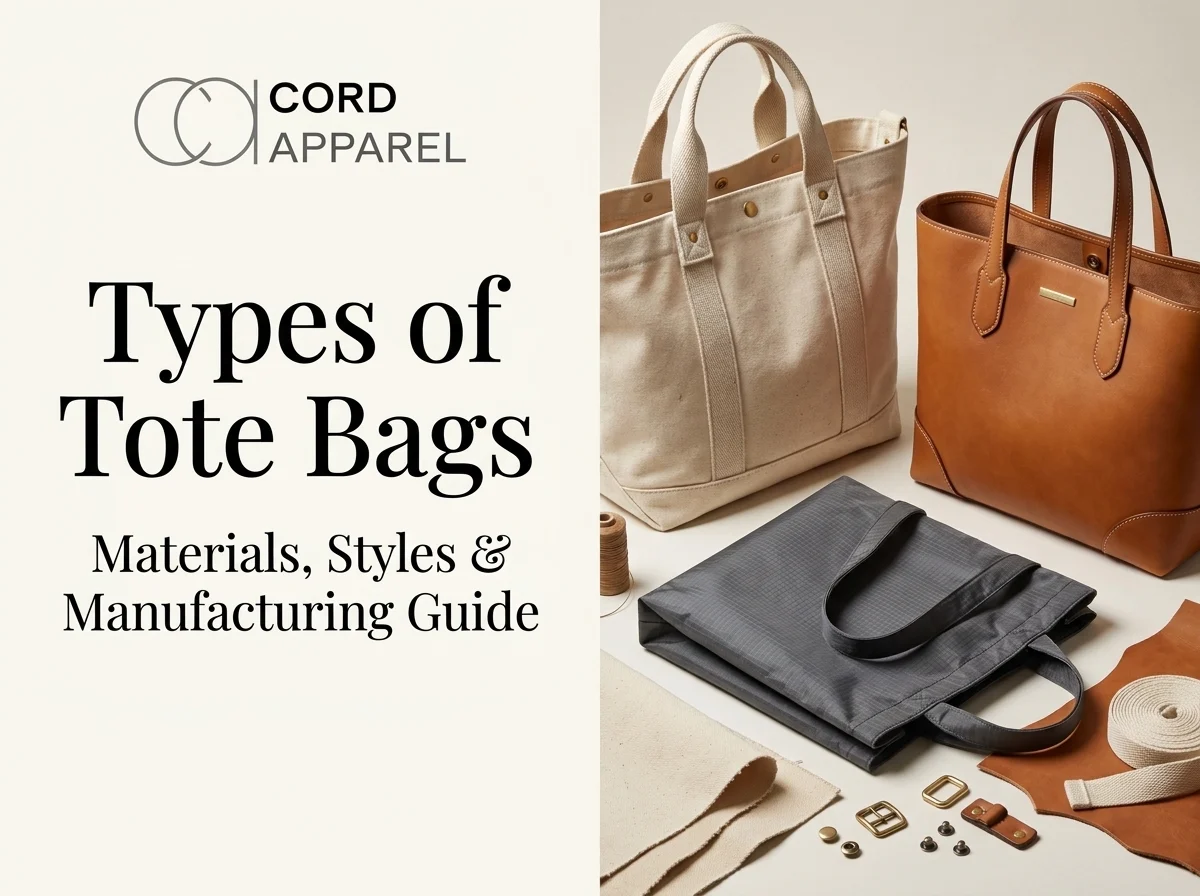
Find the Right Tote Bag for Your Brand or Business
Not all tote bags are built the same. Material, stitching, and handle construction decide whether a bag survives two seasons of daily carrying or splits at the base after one grocery run. This guide covers the main types of tote bags in production today, then shows how brands work with tote bag manufacturers to turn a rough concept into something a store will stock.
Request a Custom Tote Bag Quote
Quick Comparison: Which Tote Earns Its Place
Before the detail, the condensed version most buyers want first.
| Material | Summary | Best Fit |
|---|---|---|
| Canvas | Structured and heavy-duty. Holds shape on a shelf, costs more per unit, looks worth paying for. | Retail |
| Cotton | Light, cheap, prints beautifully. Softer body, lower load tolerance. | Promotions |
| Jute | Coarse and rugged. Reads as natural without you saying a word about it. | Grocery |
| Non-woven polypropylene | The cheapest option at volume. Built for events, not for years. | Events |
| Leather | Premium bracket. Ages well, prices high, suits luxury retail and corporate gifting. | Luxury |
| Recycled and organic fabrics | Where you land when your sourcing claims will be checked by someone. | Eco Brands |
What Is a Tote Bag?
A tote bag is an open-top carry bag with two parallel handles, usually cut from woven fabric and often unlined. Groceries, books, laptops, gym kit, the daily overflow of a normal life.
Why the category refuses to die is simple enough. A single flat panel gives you a moving billboard that customers carry into offices and grocery stores voluntarily, which almost nothing else in merchandising manages.
Then fashion got involved. What started as a plastic bag replacement now turns up in luxury lookbooks, hotel gift sets, subscription boxes, and conference welcome kits, at wildly different price points.
For brands the appeal is commercial rather than sentimental. Very few products deliver this much exposure per dollar of unit cost.
Types of Tote Bags by Material
Material sets your cost ceiling and your durability floor, and it decides how your artwork will land. Here is what each option does once it reaches the production floor.
Canvas Tote Bags
Canvas is tightly woven cotton, specified by weight, usually 10oz to 16oz for bags. Heavy enough that it holds structure with no lining or interfacing behind it.
You get strong seams, a sharp print surface and a bag that lasts. You also pay more for fabric and more for freight since weight per unit climbs fast on an international carton.
Canvas tote bags are the default when the bag itself is the product rather than the packaging.
Cotton Tote Bags
Standard cotton runs lighter, roughly 5oz to 8oz. Cheaper, faster to sew, and it takes ink cleanly.
Load capacity is the compromise. Lighter cotton stretches underweight, softens through washing, and loses its shape sooner than canvas ever will.
Giveaways, book bags, event merchandise, light retail packaging. Cotton tote bags are where most first-time buyers should start when volume outranks longevity.
Organic Cotton Tote Bags
Grown without synthetic pesticides, usually backed by third-party certification. Hand feel sits close to conventional cotton, so what you are really buying is documentation.
Budget for a higher price per metre and slower sourcing, particularly for certified stock in a specific weight and colour.
Organic cotton tote bags earn their premium when your audience reads labels and your sustainability claims are likely to get challenged.
Jute Tote Bags
Jute is a coarse plant fibre with visible weave texture, frequently laminated on the inside so it copes with moisture.
Strong, biodegradable, and it communicates natural sourcing with zero marketing effort. The texture does limit fine print detail, so artwork needs bold shapes and simple type rather than thin serifs.
Grocery, wine, and farmers market applications, mostly. Jute tote bags reinforce whatever they are carrying.
Non-Woven Tote Bags
Bonded polypropylene rather than woven yarn. This is the reusable bag handed out at trade shows and supermarket checkouts.
Cheapest per unit at scale and lightest to ship. It is also the weakest over time, and handles are almost always the failure point, because bonded fabric tears where woven fabric stretches.
Fine for short-cycle promotions and high-footfall events. A bad fit for anything positioned as premium.
Polyester Tote Bags
Synthetic, water-resistant, and it holds colour exceptionally well through sublimation printing.
Rain, sand, and rough handling barely register. The problem is positioning polyester is petroleum-based and rarely reads as eco-conscious to a buyer who is paying attention.
Sports clubs, travel accessories, outdoor event bags. Anywhere weather protection outranks material story.
Leather Tote Bags
Leather sits in a different commercial bracket entirely. Construction moves from simple panel stitching into edge finishing, skiving, hardware fitting, and lining.
Costs rise sharply and minimum quantities behave strangely, because hide yield drives material planning instead of roll width.
Leather tote bags usually need specialist leather goods manufacturers rather than a general bag line. The craft skills genuinely are different.
Recycled Fabric Tote Bags
Built from post-consumer PET or reclaimed cotton, often blended with virgin fibre so tensile strength holds up.
Performance lands close to virgin polyester, and the sourcing story survives scrutiny when certification backs it. Colour consistency across batches needs tighter control than most buyers anticipate.
Recycled tote bags suit brands that have to show measurable material decisions, not general intent.
Denim Tote Bags
Denim brings weight, visible texture, and a fashion-forward look, including deadstock and upcycled runs.
It is heavy, so freight cost per carton climbs. Indigo can also transfer onto light clothing before the fabric has been properly washed and finished, which is a complaint you only discover after shipping.
Streetwear labels, limited drops, collaborations. The material carries cultural weight on its own.
Nylon Tote Bags
Lightweight, tear-resistant, packable. Nylon folds down to almost nothing, which is exactly why foldable travel totes rely on it.
Screen ink does not sit well on it, so branding moves to woven labels, heat transfer, or printed webbing.
Choose it when packability beats shelf presence. Travel and airline retail, mainly.
Types of Tote Bags by Style
Same product category, completely different briefs. Style decides dimensions, reinforcement points and what ends up inside the bag.
- Shopping Tote Bags: wide base, high load tolerance, reinforced handles, built for a weekly routine.
- Beach Tote Bags: oversized and quick drying. Open weave or coated fabric that sheds sand rather than trapping it.
- Grocery Tote Bags: structured base and side gusset, so tins and bottles stand upright instead of rolling.
- Fashion Tote Bags: proportion and finish lead the design. Lining, hardware, and edge work justify the ticket price.
- Laptop Tote Bags: padded sleeve, reinforced base, and a closure that actually secures the opening.
- Utility Tote Bags: external pockets, heavy canvas, built for tools, garden kit or field work.
- Promotional Tote Bags: cost-led and print-led at high volume. Promotional tote bags live or die on landed unit price.
- Wine Tote Bags: divided inserts, narrow footprint, a base reinforced for bottle weight.
- Travel Tote Bags: larger capacity, longer straps, often a trolley sleeve stitched across the back panel.
- Foldable Tote Bags: packs into its own attached pouch. Popular as reusable shopping bags across US grocery chains and pharmacy retail.
Tote Bag Handle Types
Handles fail before fabric does. Nearly every complaint about a cheap tote traces back to the join, not the panel.
- Short handles: roughly 20cm to 25cm drop. Hand-carry only, cheapest to produce, quickest to assemble.
- Shoulder straps: 55cm to 65cm drop, which clears a winter coat comfortably.
- Long handles: crossbody or over-shoulder length. Standard on beach and travel totes.
- Reinforced handles: cross-stitch or box-stitch at the join. Pound for pound, the biggest durability upgrade available.
- Webbing handles: cotton or polyester webbing sewn down the full panel height, spreading load instead of concentrating it at two points.
- Leather handles: riveted or stitched. Premium in feel, and it adds both cost and finishing time to every unit.
Comfort comes from width and drops length. Durability comes from how the handle is anchored, which has nothing to do with how thick it looks in a product photo.
Put the stitch pattern in writing. Handle attachment is where cheap production quietly saves money at your customer’s expense.
Popular Tote Bag Sizes
| Size | Best For |
|---|---|
| Small | Gifts & Cosmetics |
| Medium | Daily Use |
| Large | Shopping |
| Oversized | Beach & Travel |
Size drives cost harder than most buyers expect. Fabric consumption climbs faster than the finished dimensions suggest once seam allowance and gusset are added in.
Work backwards from the largest item the bag has to hold, then add clearance. Guessing dimensions off a competitor photo is how brands end up with a bag that fits nothing.
Which Tote Bag Material Is Best?
There is no universal winner here. The answer depends on whether the bag is a product you sell or a gift you hand out.
| Material | Durability | Eco-Friendly | Cost | Best Use |
|---|---|---|---|---|
| Canvas | High | Yes | $$ | Retail |
| Cotton | Medium | Yes | $$ | Promotional |
| Jute | High | Yes | $$ | Grocery |
| Polyester | High | No | $ | Events |
| Leather | Premium | No | $$$ | Luxury |
| Organic Cotton | Medium | Yes | $$$ | Sustainable Brands |
| Recycled Fabric | High | Yes | $$ | Sustainability-Focused |
| Non-Woven | Low | No | $ | Events |
| Denim | High | No | $$ | Streetwear |
| Nylon | High | No | $$ | Travel |
Sold products justify canvas or leather, because the customer has paid for quality and will judge it accordingly. Free products rarely justify anything above mid-weight cotton.
One caution on eco claims. Fabric choice alone does not make a bag sustainable, and buyers increasingly ask for evidence on dye process, certification, and expected lifespan.
Custom Tote Bag Features
Features are what separate a branded product from a blank with a logo on it. Each one adds cost and production time, so pick deliberately instead of adding everything at once.
- Printed logos: screen printing delivers durable, opaque colour on cotton and canvas at volume, with cost driven mainly by colour count.
- Embroidery: raised, textured, premium in feel. Experienced embroidery manufacturers control stitch density so the panel does not pucker.
- Zippers: a top closure for security. Needs facing or binding, so the tape sits flat and does not catch.
- Inner pockets: slip or zip, usually sized for phones, keys, and cards.
- Magnetic closures: lighter and cheaper than zips, faster to open, noticeably less secure.
- Custom lining: hides raw seams and lifts perceived quality immediately, which matters at retail price points.
- Adjustable straps: buckle or slider hardware, so one product works as both shoulder and crossbody.
- Labels: woven main labels, care labels, origin tags. This is where private label tote bags stop being generic.
- Hang tags: pricing, barcode, and brand story for the retail floor.
- Packaging: polybags, boxes, or branded sleeves. Custom packaging bags turn a shipped product into an unboxing worth photographing.
How Tote Bags Are Manufactured
Bag production follows a defined sequence. Skipping a stage is the most common cause of delay, rework, and lost margin.
- Product concept. Define use case, load requirement, target landed cost and decoration method before anyone touches fabric.
- Material selection. Lock fabric weight, composition, and trims. Tech pack services turn those decisions into a document a factory can quote against without guessing.
- Pattern development. Panels, gussets, seam allowances and handle placement drafted to exact measurements, graded where sizes vary.
- Sampling. A physical sample confirms fit, finish, colour, and branding before any bulk commitment exists.
- Fabric cutting. Layers marked and cut to pattern, grain direction controlled so finished bags do not twist on the shelf.
- Printing or embroidery. Decoration goes onto flat panels wherever possible. Registration is cleaner than decorating an assembled bag.
- Sewing. Panels joined, manages anchored, stress points reinforced. Proper cut and sew services treat the handle join as structural work, not finishing.
- Quality inspection. Stitch density, measurements, colour consistency, and load behaviour checked against the approved sample rather than against opinion.
- Packaging. Bags folded, labelled, and packed to retail or bulk spec, often inside custom packaging bags to protect finish in transit.
- Shipping. Cartons marked, documented, and dispatched against the schedule agreed at order confirmation.
Choosing the Right Tote Bag for Your Business
Match the bag to the commercial job it has to do, not to the one that photographs best.
| Business Type | Recommended Tote |
|---|---|
| Fashion Brand | Canvas |
| Grocery | Jute |
| Corporate Gifts | Cotton |
| Luxury | Leather |
| Eco Brand | Organic Cotton |
| Promotional | Non-Woven |
Luxury and premium gifting lines almost always route through leather goods manufacturers, since finishing standards there differ sharply from fabric bag production.
Run this checklist before committing to a first order.
- What weight will the bag carry, realistically and repeatedly?
- Is this something you sell, or something you give away?
- Does the artwork need fine detail, or will bold blocks do the job?
- How many units in the first run, and what happens at reorder?
- Who signs off the sample, and against what written specification?
Common Tote Bag Manufacturing Mistakes
Most tote bag problems are predictable, which is another way of saying they are preventable at the spec stage.
- Choosing the wrong fabric. Risk: a bag that fails in normal use and takes brand trust down with it. Solution: match fabric weight to real load, then sample and stress-test before bulk.
- Weak stitching. Risk: seams opening at the base under everyday weight. Solution: specify stitch type and stitches per inch, then confirm both on the approved sample.
- Poor handle reinforcement. Risk: the most visible failure a customer can experience, usually in public. Solution: cross-stitch or box-stitch every join as standard, never as an upgrade.
- Incorrect sizing. Risk: a bag that looks right in renders and fits nothing in reality. Solution: measure a physical reference product and document every dimension. Clear tech pack services remove this one almost entirely.
- Low-quality printing. Risk: cracked or faded artwork within weeks. Solution: match ink and method to fabric, then wash-test. Correctly specified screen printing survives years on canvas.
- Ignoring load capacity. Risk: returns and complaints generated by ordinary use. Solution: state a target load in the spec and evaluate the sample against it before approval.
- Weak packaging. Risk: creased, marked stock arriving at retail after a clean production run. Solution: specify packing format early, so it is planned rather than improvised on dispatch day.
Why Brands Choose Cord Apparel
Cord Apparel manufactures custom tote bags for brands that need consistent output across repeat orders, not one lucky sample. The team works out of Missouri City, Texas, and supports US brands with domestic and global production options.
Challenge: Brands need durable tote bags with consistent quality order after order.
Solution: Cord Apparel combines material selection, skilled construction, and staged quality inspection to produce retail-ready bags that hold their spec batch after batch.
Challenge: Startups cannot commit to large first runs before a product is proven.
Solution: Low MOQ options let new labels test properly, then scale into bulk once demand is real.
Challenge: Managing separate vendors for production, branding, and packing burns weeks in coordination. Solution: Development, sampling, production, finishing, and packing sit under one roof with a single point of contact.
Verified capabilities include:
- Custom tote bag manufacturing across canvas, cotton, blended fabrics, and leather
- Private label production, run on the same systems private label clothing manufacturers use for apparel programmes
- Cut and sew services covering pattern making, grading and panel assembly in house
- Fabric sourcing matched to product goals, performance needs, and budget
- Sampling and pattern development ahead of any bulk commitment
- Low MOQ options alongside scalable bulk production
- Material choices aligned with the company’s published approach to sustainability
- Quality control checks at multiple stages instead of one final pass
- Custom packaging support for wholesale and direct-to-consumer brands
- USA and global manufacturing support with structured oversight
Brands sourcing wholesale tote bags, branded tote bags or a long-term custom bag manufacturer get the same process either way. Clear specifications, an approved sample, checked output before anything ships.
Request a Custom Tote Bag Quote
Comparison Table
| Tote Bag Type | Material | Durability | Best For | Customizable |
|---|---|---|---|---|
| Canvas | Canvas | High | Retail | Yes |
| Cotton | Cotton | Medium | Promotions | Yes |
| Jute | Jute | High | Grocery | Yes |
| Leather | Leather | Premium | Luxury | Yes |
| Polyester | Polyester | High | Events | Yes |
| Organic Cotton | Organic Cotton | High | Sustainable Brands | Yes |
FAQ
What are the diverse types of tote bags?
The diverse types of tote bags divide two ways, by material and by style. Materials include canvas, cotton, organic cotton, jute, non-woven, polyester, leather, recycled fabric, denim, and nylon. Styles cover shopping, grocery, beach, fashion, laptop, utility, wine, travel, and foldable totes.
Which tote bag material is the strongest?
Heavyweight canvas and jute give the best strength-to-cost ratio for everyday loads. Well-finished leather outlasts both, at a much higher price. Fabric alone never tells the whole story though since stitch quality and handle anchoring decide where a bag fails.
What is the best fabric for custom tote bags?
Heavyweight canvas is the safest starting point for anything sold at retail. For high-volume giveaways, mid-weight cotton keeps unit cost sensible and still prints cleanly. Match the fabric to the commercial job rather than the trend.
Are canvas tote bags better than cotton?
Canvas is heavier, stronger and holds its shape, for which suits products people pay. Cotton is lighter and cheaper, which suits volume promotions. Neither wins in the abstract, only for a specific use case and budget.
What size tote bag should I choose?
Small for gifts and cosmetics, medium for daily carry, large for shopping, oversized for beach and travel. Start from the largest item the bag must hold, then add clearance for comfortable loading.
Can I create private label tote bags?
Yes. Private label covers your own labels, tags, packaging and finishing on a bag built to your specification, using the same branding systems private label clothing manufacturers apply across apparel.
What printing options are available?
Screen print for bold, durable colour on cotton and canvas. Sublimation for full-colour polyester. Heat transfer for nylon and coated fabrics. Stitched branding is managed by embroidery manufacturers who manage digitising and stitch density.
Does Cord Apparel offer low MOQs?
Yes. Low MOQ options are available, with exact quantities depending on material, construction, and design complexity.
Can Cord Apparel manufacture eco-friendly tote bags?
Yes. Eco friendly tote bags can be produced in cotton, organic cotton and recycled or blended fabrics, with sourcing confirmed at the material planning stage.
How long does tote bag production take?
Timelines depend on design complexity and order quantity. Experienced tote bag manufacturers confirm a schedule after sample approval, covering sampling, bulk production, and dispatch.

Leave a Reply