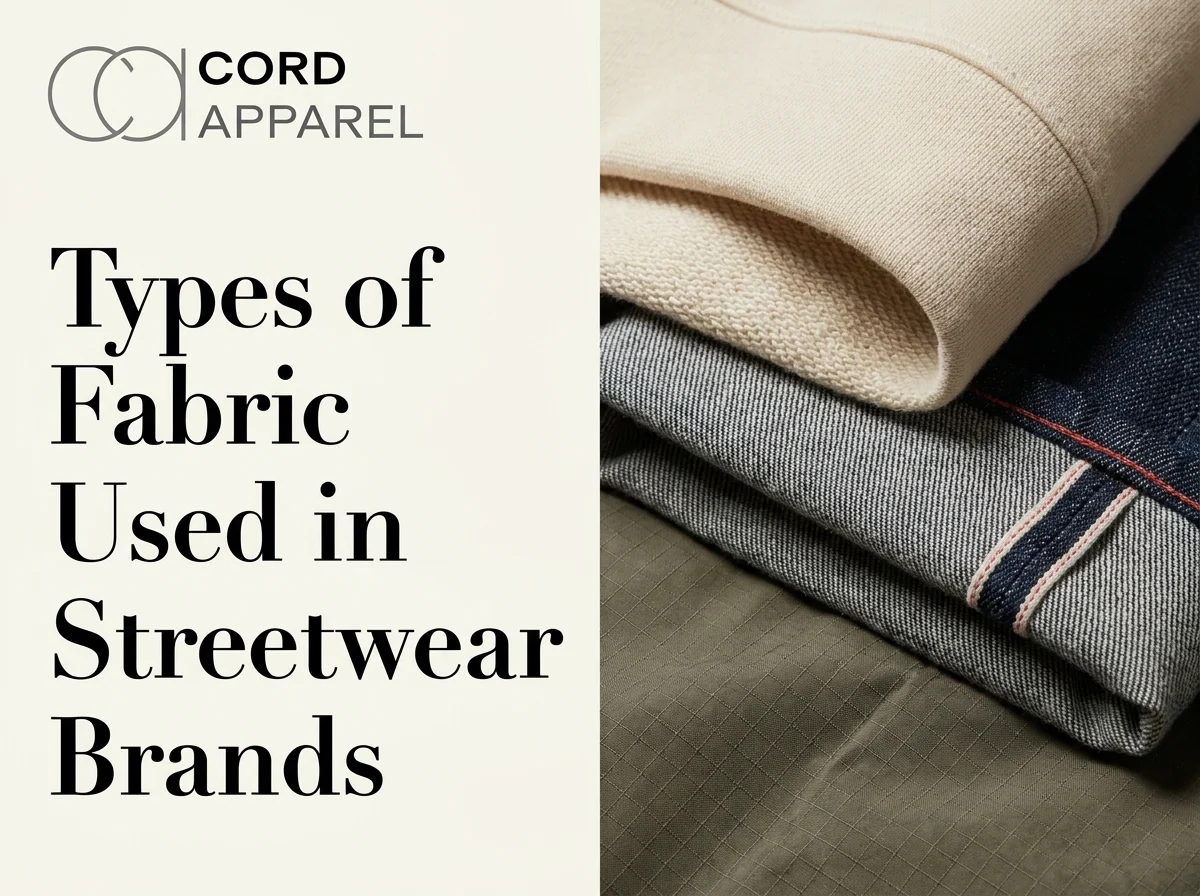
Streetwear moves fast, sometimes drop to drop, not even season to season. And under all of it sits a decision a lot of founders just rush past. Fabric. Get it wrong and that hoodie that looked incredible on a mood board feels cheap the second somebody tries it on. Get it right and it is the piece people will not shut up about. Streetwear fabrics are not a footnote here. They are half the brand. Work with clothing manufacturers who get how fabric behaves once it is cut and worn, not just what it is called on a spec sheet, and a collection performs completely differently in the real world. So, what is being used right now? Let us just get into it.
Why Fabric Matters in Streetwear
Fit gets decided before a single stitch happens, and fabric is what decides it. How something drapes. Whether it survives ten washes or falls apart by month two. It quietly signals price too, whether anyone means for it to or not. Heavyweight cotton reads premium. Thin scratchy blends read cheap. That is just how people process it, fair or not, and there is no getting around it. Design gets shaped by fabric as well. You cannot build an oversized cut out of something flimsy. Layering pieces need to breathe. None of that’s decoration. It is the floor everything else stands on, whether founders clock it early or find out the hard way.
Streetwear Clothing Materials
Before getting into individual fabrics, it helps to see the material landscape. Streetwear draws from a handful of core categories: natural fibres like cotton, synthetic performance fabrics like polyester, blends that split the difference, and structured wovens like denim and twill for anything that needs to hold its shape under stress. Every piece in a collection, from a basic tee to a heavyweight outer layer, pulls from one of these categories, and knowing which one fits a given product is most of the fabric decision.
Cotton: The Foundation of Streetwear
Most streetwear starts here. Soft, breathable, comfortable enough you forget you have got it on by hour three. That is the whole reason cotton dominates t-shirts, hoodies, sweatshirts, everywhere in this space really, from someone running production out of a garage to the labels everyone already knows.
Not all cotton is the same cotton though.
Regular cotton is the affordable baseline most basics sit on. Combed cotton gets extra processing to strip out the short fibres, which leaves it smoother. Organic cotton skips synthetic pesticides in growing, and more buyers are asking for it by name now, not just as a nice-to-have.
Picking between the three is not about finding a “best” option. It is matching the grade to your price point and being honest with yourself about what you are promising the customer.
Heavyweight Cotton for Premium Streetwear
Touch a genuinely premium hoodie once. You will know immediately. Streetwear fabric weight is usually talked about in GSM, grams per square meter, and the range tells the story on its own. Lighter tees sit around 180GSM. Standard hoodies land closer to 240GSM. Heavyweight hoodie fabric, the kind high-end streetwear brands search for, runs at 300GSM and up, and that extra weight is what gives oversized fits the structure to hang right instead of collapsing into a shapeless bag. High-end streetwear brands lean on this hard. It holds a silhouette. Feels substantial in hand. Signals quality before anyone has even flipped the tag over.
Polyester and Performance Blends
Polyester earns its spot on function, not hype. Lightweight, durable, moisture-wicking where the design calls for it, and it shows up constantly in tech wear, anywhere streetwear starts blurring into athletic gear. Brands building activewear-adjacent streetwear pieces reach for polyester or performance blends for one reason really. Cotton just cannot keep up once sweat and movement enter the picture.
Cotton-Polyester Blends
Blends split the difference, and that is the whole pitch. Keep cotton’s comfort, add polyester’s resistance to shrinking and stretching, end up with something that survives repeated washing without losing shape. At this point cotton-poly is close to the default for hoodies and sweatshirts across the board. Not because blending’s trendy. Because it just holds up better across more conditions than either fibre does solo.
Fleece Fabric for Hoodies and Sweatshirts
Fleece is the warmth play. Soft inside, often brushed for extra loft, and it is behind most of the cold-weather hoodies and sweatshirts you will find on a rack anywhere. Casual and athleisure streetwear lean on it hard once temperatures drop and comfort starts beating everything else on a customer’s list.
French Terry Fabric
Think of French terry as fleece’s lighter sibling. Smooth outside looped inside. It is the middle-weight option for transitional weather, spring mostly, sometimes early fall, those stretches where a full fleece hoodie is too much and a t-shirt is not enough. Become a favourite for pieces meant to layer without piling on bulk.
Denim and Twill Fabrics
Bottoms and jackets come from an entirely different family. Denim and twill bring structure and an urban edge soft knits just cannot touch. Brands building out denim collections count on that durability directly, since jeans and jackets take a beating, a t-shirt never will. There is an aesthetic side too, honestly. Worn-in denim tells a story cotton jersey cannot quite tell the same way.
Sustainable Fabrics in Streetwear
Sustainability stopped being a nice-to-have a while back if we are being real. Organic cotton, recycled polyester, both keep showing up more, pushed by customers who genuinely care where their clothes come from and not just how they look on camera. It is not universal, not even close. Plenty of brands still chase cost over sourcing and that is not changing overnight. But the direction’s clear enough now that skipping it entirely starts to look like a missed opportunity more than a neutral choice.
Why Cut & Sew Streetwear Requires Different Fabrics
Cut and sew production puts different demands on fabric than knitting a garment as one continuous piece. Panels get cut, sewn together, and pressed under tension, and a fabric that looks fine on the roll can behave very differently once it has been through that process. Choosing cut and sew streetwear fabrics means accounting for a few things that do not show up on a spec sheet until production is already underway.
- Fabric shrinkage. A fabric that shrinks unevenly after washing throws off fit across an entire size run, not just one panel. Pre-shrinking and evaluating a fabric through wash cycles before cutting is what keeps a hoodie’s measurements matching its tech pack once it reaches the customer.
- GSM consistency. Cut and sew relies on every panel behaving the same way under the needle. A roll with inconsistent GSM produces panels that stretch or press differently, and that inconsistency shows up as puckering or uneven seams once the pieces come together.
- Panel matching. Multi-panel pieces, like a hoodie with a separate hood, pouch pocket, and body, need fabric that behaves identically across every cut piece. A mismatch in stretch or weight between panels is what causes a seam to pull or a pocket to sit wrong after the first wash.
- Print compatibility. Screen printing and embroidery both depend on a stable, even surface. A fabric that shifts or stretches during printing distorts artwork, and heavier cotton or structured blends hold a print cleaner than a lighter, looser knit.
- Sewing stability. Fabric that stretches or curls at the cut edge slows down production and makes consistent seam allowances harder to hold. Wovens and stable knits sew cleaner and faster, which matters directly to cost once an order moves from a sample to a full production run.
None of this is about picking a fancier fabric. It is about picking one that survives the actual construction process, not just the fabric test.
How to Choose the Right Fabric for Your Streetwear Brand
Quick reference, since a table beats another paragraph here:
| Fabric | Best For | Feel |
|---|---|---|
| Regular cotton | T-shirts, basics | Soft, breathable |
| Combed cotton | Elevated basics | Smooth, refined |
| Heavyweight cotton | Premium oversized fits | Structured, substantial |
| Polyester/performance blends | Tech wear, active streetwear | Lightweight, moisture-wicking |
| Cotton-poly blends | Hoodies, sweatshirts | Balanced comfort and durability |
| Fleece | Cold-weather hoodies | Warm, soft interior |
| French terry | Transitional pieces | Light, breathable |
| Denim/twill | Bottoms, jackets | Rugged, structured |
Past that, it really comes down to four things. What you are building. Who is buying it. Where it sits on price. What season it drops in. Get those straight and honestly, the fabric picks itself most of the time.
How Cord Apparel Supports Fabric Selection
A swatch card only tells you so much, that is the truth. Cord Apparel collaborates with founders through product development and sampling, and there is a genuinely wide range of fabric options on hand instead of some narrow catalo everyone gets funnelled into. T-shirt, hoodie, something heavier, does not matter. That guidance during sampling is usually what stops a brand from finding out too late that a fabric just does not hold up. Quality checks stay in place across the whole apparel production process, so what gets approved in a sample is what ships out the door.
Conclusion
Streetwear fabrics shape more than comfort. They shape how a brand gets read the second someone touches the product, and whether that first impression survives a few washes or falls apart by the third one. Cotton, polyester, blends, fleece, denim, each one is doing a different job here, and there is no single right answer waiting at the end of this. The brands getting it right treat fabric as a design call, not something to sort out after the fact. Work with a manufacturer who has already watched these trade-offs play out, and the whole thing gets a lot less of a gamble.

Leave a Reply