Are you struggling to find which private label clothing manufacturing model suits you the best? But are you confused whether private label or custom apparel manufacturing will suit your brand identity the best?
We understand that choosing the right apparel manufacturing model is one of the most important decisions for any fashion brand. In 2025, the U.S. apparel market was projected to generate about $365.7 billion in revenue, making it one of the largest markets globally and a highly competitive space for brands of all sizes. Afterall, it affects your brand’s budget and the product quality. It will affect the launch speed of your products and how much control you have over your designs.
For growing brands in the USA, the choice often comes down to private label vs custom apparel manufacturing. Both options have their own benefits, but they serve different goals for each brand. While private label focuses on speed and simplicity, custom manufacturing gives you full creative freedom. Understanding how each model works helps you avoid costly mistakes and choose a path that supports long-term growth.
At Cord Apparel, brands can access both private label and custom apparel manufacturing under one roof, making it easier to scale without switching suppliers. Let’s break down each option and help you decide what works best for your brand.
What Is Private Label Apparel Manufacturing?
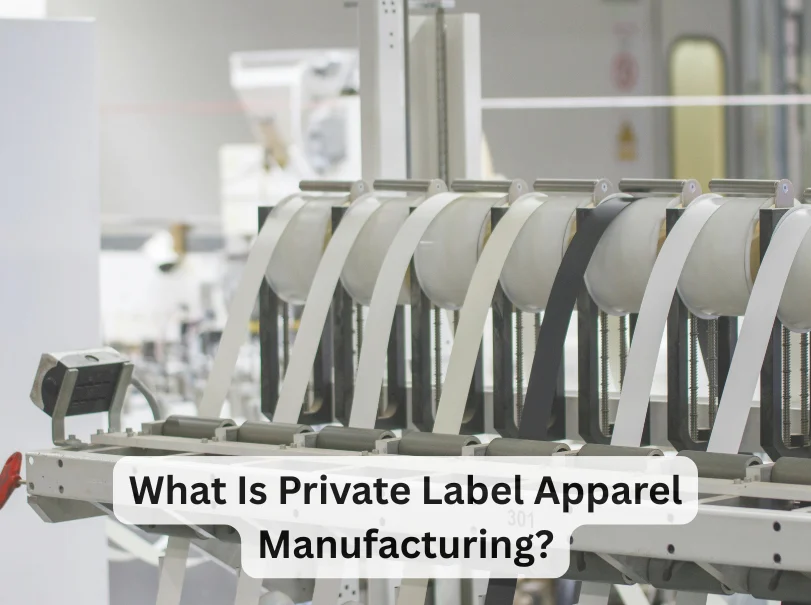
Private labeling occurs when a corporation sells prefabricated clothes without any labels or tags bearing the manufacturer’s identity. This lets the consumer buy a ready-made garment and have the manufacturer customize the labels and tags with the buyer’s brand logo. Thus, allowing brands to sell ready-made garments under their own brand name. Instead of creating products from scratch, you choose from pre-designed styles that are already developed and production ready.
These garments can be customized with your logo, labels, packaging, and sometimes minor design changes such as color or fabric variations.
This type of service is frequently employed by fashion companies/private label brands that capitalize on the manufacturer’s expertise and skills while selling the products under their own label. The distinctiveness of the design is what distinguishes private label products. A buying brand can purchase exclusive design rights so that it cannot be made by anybody else.
Key Features of Private Label Apparel Manufacturing
- Pre-designed and pre-tested garment styles
- Branding through labels, tags, and packaging
- Faster production timelines
- Lower minimum order quantities (MOQs)
- Reduced sampling and development costs
Who Is Private Label Best For?
Private label apparel manufacturing is ideal for:
- Startup fashion brands evaluating the market
- DTC ecommerce brands launching quickly
- Businesses with limited budgets
- Brands focused on basics like t-shirts, hoodies, or activewear
For many USA-based startups, private label provides a low-risk way to enter the market and start generating sales without heavy upfront investment.
What Is Custom Apparel Manufacturing?

A more individualized service, custom clothing, begins with the client’s original design concept and works to make it a reality.
Custom apparel covers every step of the production process from the ground up, in contrast to private labels. To do this, though, the client needs to have a clear idea and manage every aspect of the design, including creating the pattern, locating fabric, and sourcing materials. It is a fully tailored process where garments are developed from the ground up. Every detail is created based on your brand’s identity.
This model provides complete control over fit, materials, sizing, and design details, making it ideal for brands seeking a strong and unique identity.
Because they use some of the same procedures, custom apparel, and a full package, they are occasionally confused. However, a full package starts the process from the beginning, whereas custom clothing skips the research and proposal stages and starts the process from the design phase.
Key Features of Custom Apparel Manufacturing
- Original designs developed from scratch
- Custom pattern making and grading
- Fabric sourcing and trim selection
- Tech packs and sampling
- Higher control over quality and branding
Who Is Custom Manufacturing Best For?
Custom apparel manufacturing works best for:
- Premium and fashion-forward brands
- Labels focused on fit, innovation, or performance
- Established brands ready to scale
- Businesses building long-term brand value
While custom manufacturing requires more time and investment, it enables leather goods manufacturing brands to differentiate themselves in crowded markets.
Private Label vs Custom Apparel: Side-by-Side Comparison
Understanding private label vs custom apparel manufacturing becomes easier when you compare them across key factors.
MANUFACTURING
Private label clothing is distinguished by the fact that it is manufactured in mass, as opposed to custom clothing, which requires each garment to be designed individually and the entire process to be paid for.
On the other side, private labels allow you to purchase a range of pre-made designs.
DESIGN
To begin the manufacturing process for custom apparel, a preliminary design or sketch must be provided. Private label, on the other hand, is in the last stages of the manufacturing process and offers ready-made garments.
Private label eliminates the need to design from scratch, as is the case with custom apparel. It also allows you to adjust the finalized design; for example, you can change the color, fabric type, or specifics such as sleeve length or neckline.
PROCESSES
When making custom clothing from scratch, more steps are involved, such as producing a sample (physical or digital), technical specifications, patterns, sourcing (fabrics, materials, labels), cutting, stitching, and quality control.
Because the garment goes through so many process phases, it takes significantly longer to be ready for sale than with a private label, and the same is true for traditional production services.
Private Label does not require any of these processes because the garment is already created and ready to sell unless the client requests changes to the design.
PROFITABILITY
Private label is a more profitable alternative than custom apparel or a full bundle because it does not require production. Bulk sales offer price flexibility and the option of receiving manufacturer discounts. This option is ideal for developing or small firms that want a wide range of designs, flexible pricing, and high quality.
Custom apparel, on the other hand, demands a larger initial investment and a longer production period, making it a less profitable option. However, it is entirely dependent on the client’s budget. As a result, it is not a viable solution for businesses/brands that cannot produce their lines independently.
MOQs
Private label order volumes vary by manufacturer or producing company and are often low. In contrast, custom apparel requires a large minimum order quantity per reference to begin manufacturing.
| Factor | Private Label Apparel | Custom Apparel Manufacturing |
|---|---|---|
| Design Flexibility | Limited to existing styles | Fully custom designs |
| Time to Market | Fast (weeks) | Longer (months) |
| Development Cost | Low | Higher |
| MOQs | Low | Medium to high |
| Branding Control | Moderate | Full control |
| Scalability | Good for testing | Ideal for long-term growth |
This comparison highlights why choosing between private label vs custom apparel manufacturing depends on your brand’s stage and goals.
Check our blog on: How to start a clothing brand.
Pros and Cons of Private Label Apparel Manufacturing
Advantages of Private Label
Private label apparel manufacturing offers several benefits for new and growing brands:
- Faster launch: Products are already developed
- Lower upfront costs: Minimal sampling and development
- Simplified production: Fewer technical decisions required
- Lower risk: Easier to evaluate demand in the USA market
These advantages make private label appealing for brands that want speed and simplicity.
Limitations of Private Label
Despite its benefits, private labels have some drawbacks:
- Limited design uniqueness
- Similar products may be sold by other brands
- Less control over fit and fabric innovation
If differentiation is a priority, these limitations may become a concern over time.
Pros and Cons of Custom Apparel Manufacturing
Advantages of Custom Manufacturing
Custom apparel manufacturing gives brands full ownership of their products:
- Complete creative control over design and fit
- Strong and recognizable brand identity
- Higher perceived value and pricing power
- Better long-term scalability
This model supports brands aiming for premium positioning and customer loyalty.
Challenges of Custom Manufacturing
Custom manufacturing also comes with challenges:
- Longer development and production timelines
- Higher upfront costs for samples and patterns
- More decisions are required during development
For many brands, these challenges are manageable with the right manufacturing partner.
Which Manufacturing Option Is Best for Your Brand?
There is no single answer in the private label vs custom apparel manufacturing debate. The right choice depends on your brand’s current situation.
Startups and Test Collections
Private labels work well if you:
- Are you launching your first collection
- Want to evaluate styles and pricing
- Need quick turnaround with low investment
Established Brands Scaling Up
Custom apparel manufacturing is better if you:
- Have proven demand
- Want exclusive designs
- Are building long-term brand equity
Fashion vs Basics-Focused Brands
- Basics-focused brands often succeed with private label
- Fashion-forward brands benefit from custom manufacturing
Budget vs Premium Positioning
- Budget-driven brands lean toward private label
- Premium brands choose custom manufacturing
Can You Combine Private Label and Custom Manufacturing?
Yes, many successful brands use both models at different stages.
A common strategy is to:
- Start with a private label to launch quickly
- Transition to custom apparel manufacturing as the brand grows
- Use a hybrid approach for seasonal or limited collections
This flexible approach reduces risk while allowing creative growth. Cord Apparel supports hybrid manufacturing models so brands can evolve without disruption.
Why Brands Choose Cord Apparel for Private Label & Custom Manufacturing
Brands across the USA work with Cord Apparel because it offers flexibility and guidance at every stage.
Key reasons brands choose Cord Apparel include:
- Private label and custom apparel manufacturing services
- Low MOQ solutions for startups
- Fabric sourcing and tech pack support
- USA-based and overseas production options
- Dedicated account management
Final Thoughts
The choice between private label vs custom apparel manufacturing depends on your goals, budget, and timeline. Private label is ideal for fast launches and testing ideas, while custom manufacturing supports originality and long-term growth. Neither option is better by default; the best choice is the one that aligns with your brand strategy.
As your business evolves, your manufacturing approach can evolve too. Collaborating with an experienced partner like Cord Apparel makes it easier to adapt, scale, and succeed. If you are unsure which path to take, speaking with a manufacturing specialist can help you make a confident decision.
Ready to Take the Next Step
- Get Expert Advice on Apparel Manufacturing
- Request a Quote from Cord Apparel
- Talk to a Manufacturing Specialist
Explore private label clothing, cut and sew manufacturing, and tech pack services to find the right solution for your brand.

Leave a Reply