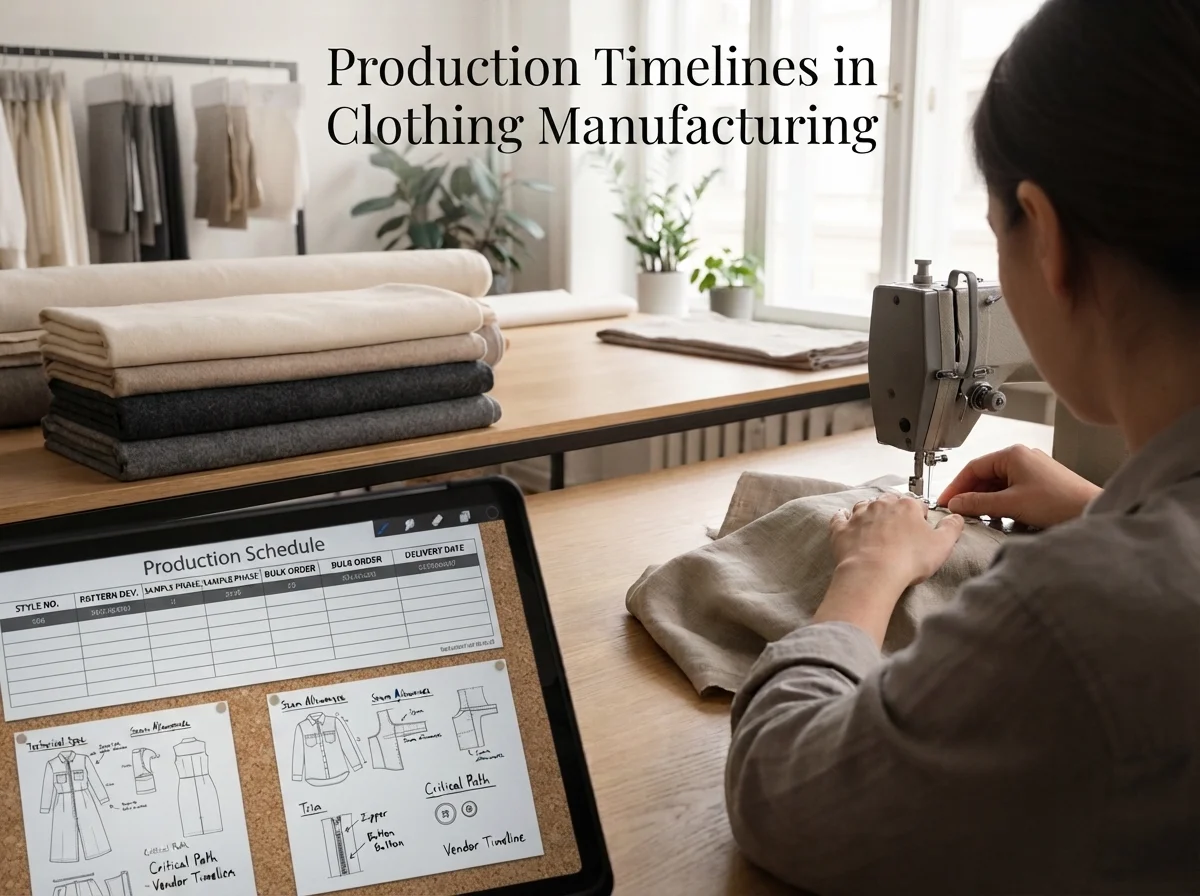
Most contemporary brands budget carefully for fabric, sampling, and freight, then forget to budget for time. That is where launches quietly fall apart. A clothing production timeline is not one number a factory quotes you on a call. It is a chain of stages, each with its own dependencies, and each capable of adding weeks when something upstream is unclear. Delays rarely come from lazy factories. They come from missing information, slow approvals, and assumptions nobody wrote down. Comparing clothing manufacturers gets much easier once you know what a realistic schedule looks like. Here is every stage, from concept sketch to warehouse delivery.
Why Production Timelines Matter
Your ship date decides your marketing calendar, not the other way around. Ads, influencer seeding, and email flows all get built backward from inventory arrival, so a two-week slip does not just move a launch. It burns paid spend on a product nobody can buy yet.
Cash flow takes the same hit. Deposits leave early, revenue arrives late, and a long clothing manufacturing lead time widens the gap where undercapitalized brands stall out.
Then there is season. US retail runs on tight windows, and holiday, back to school, and summer drops do not wait. Miss a fashion manufacturing timeline by three weeks and you are selling swim shorts in September.
Overview of the Full Production Timeline
Here is the condensed version most factories will confirm:
- Concept and design: 1 to 2 weeks
- Sampling: 2 to 4 weeks
- Bulk production: 3 to 8 weeks
- Shipping: 1 to 4 weeks
Complexity and order size move any apparel manufacturing timeline in both directions. A 100-piece run of basic tees behaves nothing like 3,000 units of structured outerwear with custom hardware. Treat the range as a planning frame, not a promise, and confirm your clothing manufacturing lead time in writing before you commit to a launch date.
Stage 1: Product Development & Design
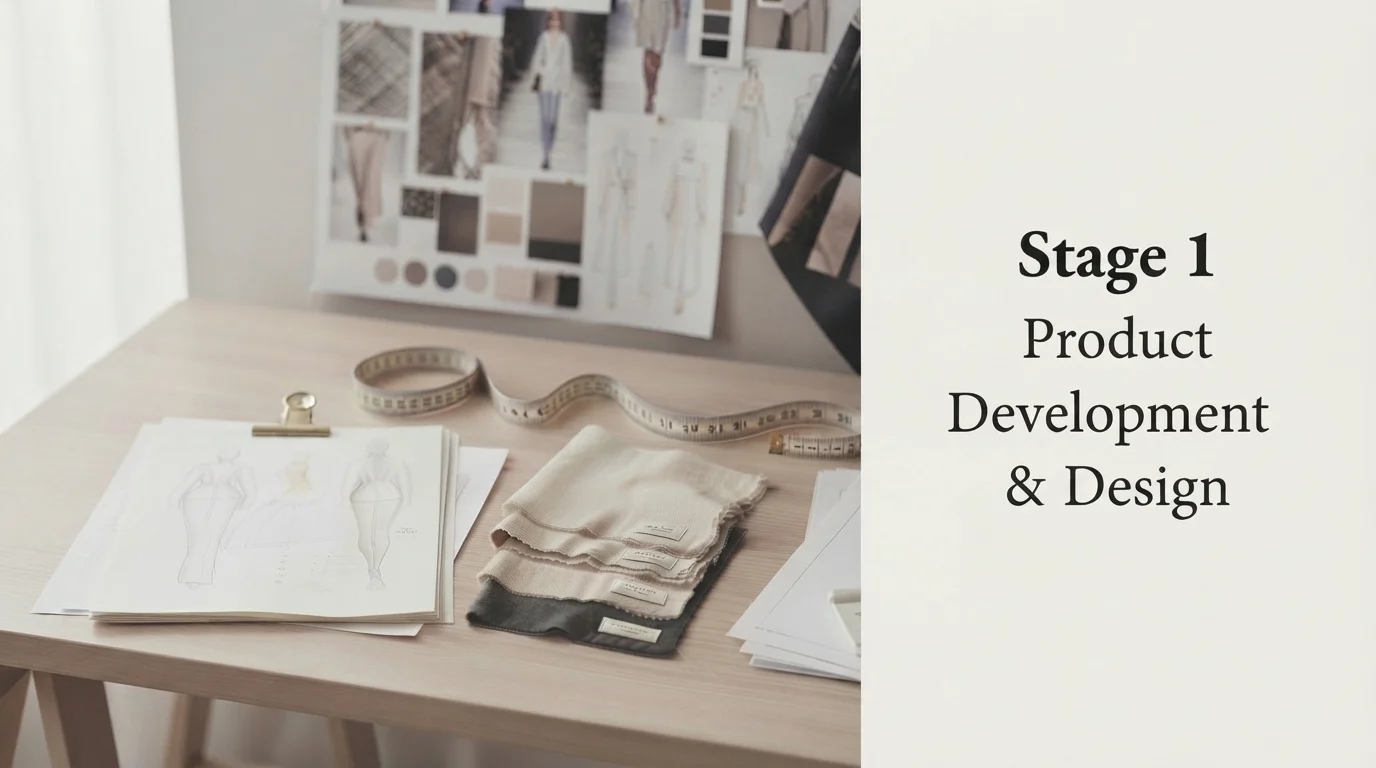
This is where you lock the product. Final silhouettes, colorways, sizing logic, and construction details all get decided here, then translated into a tech pack the factory can build from. Materials and specifications need naming at this point, not later.
Typical timeline: 1 to 2 weeks.
Brands that rush this stage pay for it three times over during sampling.
Stage 2: Sampling & Prototyping
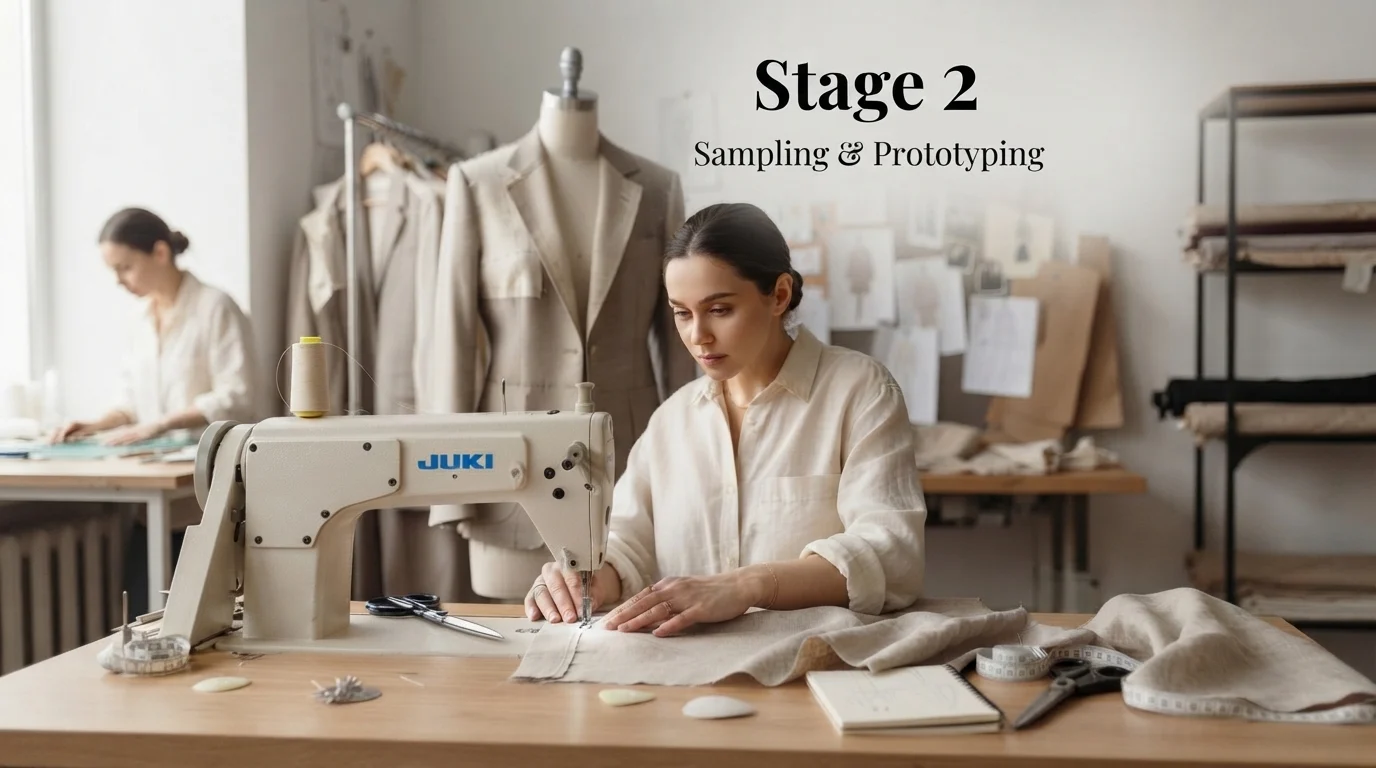
The factory produces a physical sample, you fit it, you check the stitching and the hand feel, and you send back revisions. Then it happens again. Two rounds is normal. Four means something went wrong at the tech pack stage.
Typical timeline: 2 to 4 weeks.
Sampling delays are common when revisions are vague. “Make it a bit boxier” is not a spec. Serious product development and sampling work means measurements, tolerances, and reference images. Clear feedback here compresses your custom clothing production time more than any other single decision.
Stage 3: Material Sourcing
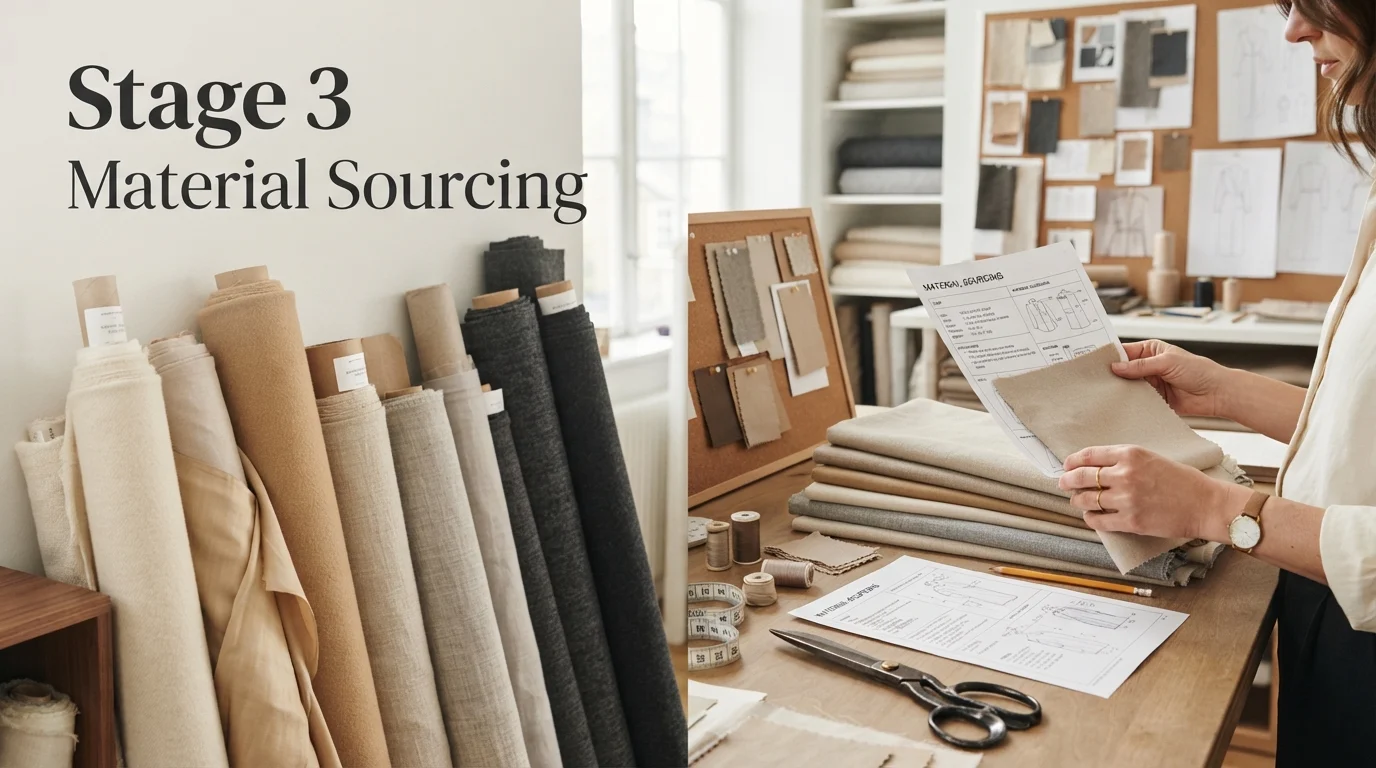
Fabric and trims get sourced while sampling runs, which is why this stage often overlaps rather than stacks. Stock fabrics move fast. Custom knits, specialty dye lots, and branded hardware do not.
Typical timeline: 1 to 3 weeks, frequently parallel to sampling.
If your fabric needs to be woven or dyed to order, add two to four weeks and plan around it early.
Stage 4: Bulk Production
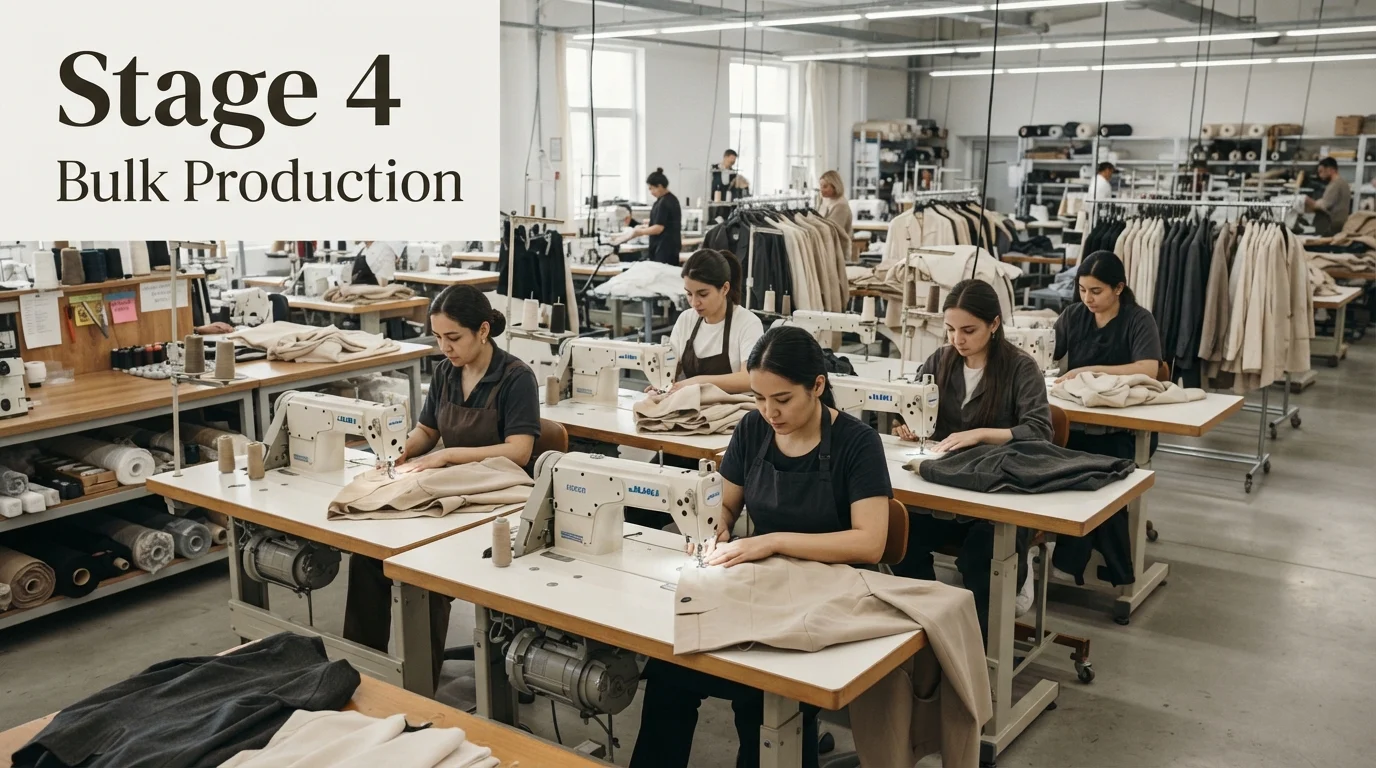
Cutting, stitching, printing, and finishing all happen here, in sequence, across a shared factory floor. Your order competes for machine time with everyone else’s.
Typical timeline: 3 to 8 weeks.
Volume and complexity drive that spread. A well-run apparel production process keeps garment production time predictable by locking materials and approvals before a single piece is cut.
Stage 5: Quality Control
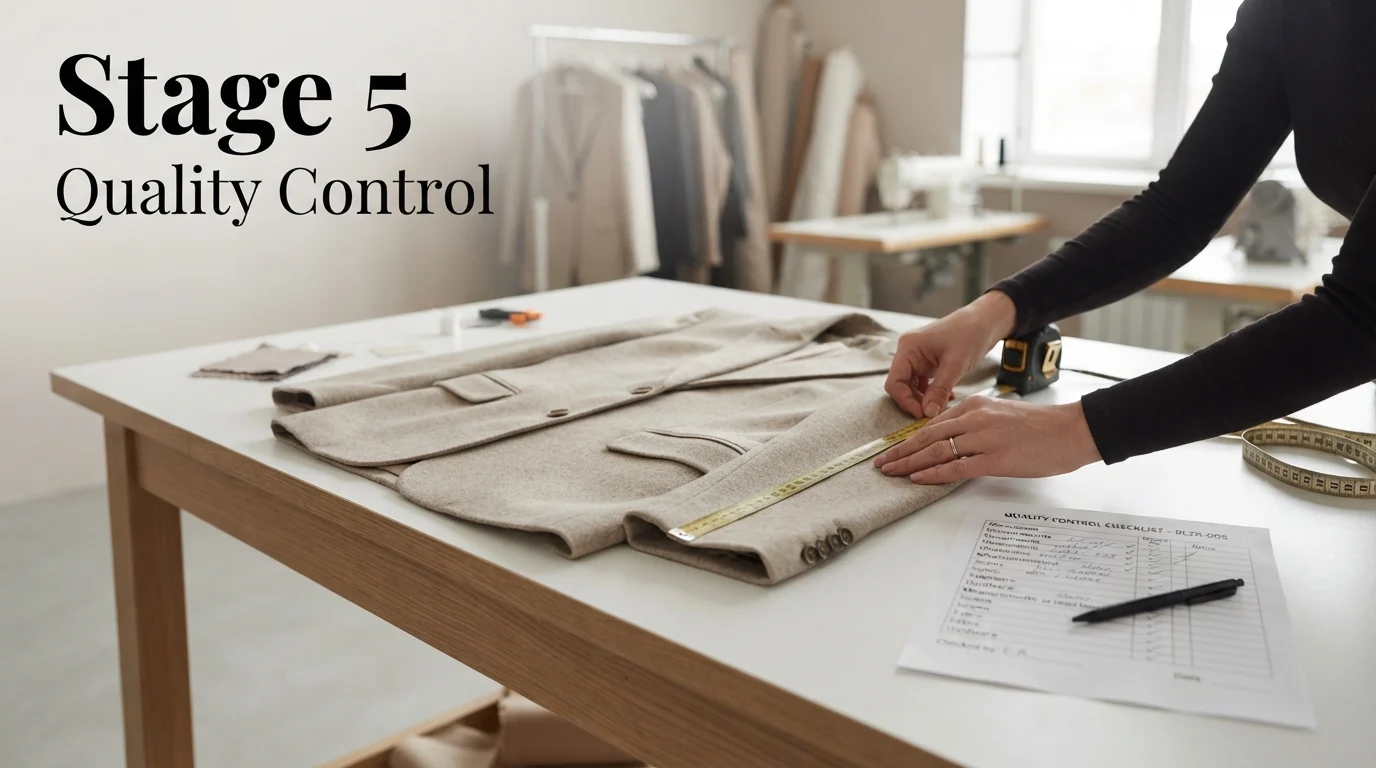
Inspection happens in layers. Fabric gets checked on arrival, stitching and finishing get checked mid-run, and finished goods get checked before packing.
- Fabric inspection for flaws, shade variation, and shrinkage
- In-line checks on seams, hems, and construction.
- Final inspection against your approved sample
Quality control adds little to overall garment production time. Skipping it saves days and costs you returns.
Stage 6: Shipping & Delivery
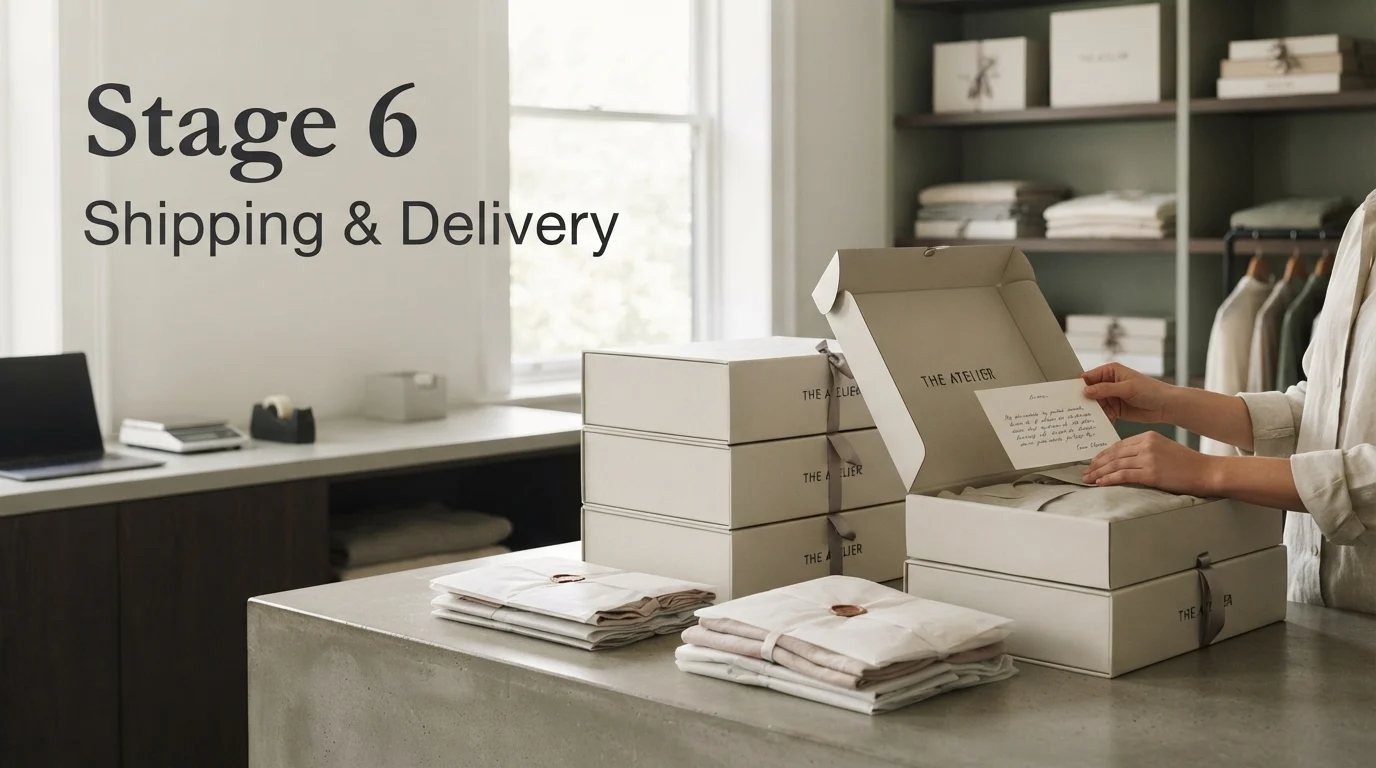
Freight is the stage brands forget until it is too late. Your method changes your timeline dramatically.
| Method | Transit Time | Best For |
|---|---|---|
| Air | 5 to 10 days | Launches, restocks, small runs |
| Sea | 20 to 40 days | Bulk orders, planned seasons |
Customs clearance adds several days on top, and US port congestion can add more. Then goods still need to reach your warehouse or 3PL and get received before anything ships to customers.
Common Causes of Delays
Every blown apparel manufacturing timeline traces back to one of these:
- Incomplete tech packs that force the factory to guess
- Design changes made after production starts.
- Fabric shortages or discontinued dye lots
- Slow, scattered communication across time zones
- Peak season demand filling factory capacity
How to Speed Up Production Timelines
Cutting custom clothing production time is about removing friction, not rushing the floor.
- Send a complete tech pack with measurements, materials, and construction notes.
- Approve or reject samples within 48 hours, not next month.
- Keep one decision maker on the account.
- Work with experienced factories that flag problems early.
- Book capacity ahead of peak season instead of during it
- Order fabric before final sample approval when the base material is confirmed.
None of this is complicated. It is just discipline, applied early, when it still costs nothing.
How Cord Apparel Ensures Efficient Timelines
Cord Apparel runs structured workflows with defined checkpoints, so you always know which stage your order sits at. Updates come to you rather than waiting for you to chase them.
We work with startup and scaling brands out of Missouri City, Texas, supporting US brands with both domestic and overseas production. Our sampling process is built to reduce revision rounds, and our low MOQ clothing manufacturers approach lets newer labels test collections without long production queues. Efficient custom apparel manufacturing starts with clarity, not pressure.
Realistic Timeline Example (Case Scenario)
Here is what a realistic fashion manufacturing timeline looks like for a small US brand:
- Week 1 to 2: Design finalized, tech pack delivered.
- Week 3 to 5: Sampling and fit approval
- Week 6 to 10: Bulk production and quality control
- Week 11 to 12: Shipping, customs, warehouse receiving.
That is three months from locked design to sellable inventory. Add buffer for a first order with a new factory. Every experienced brand does.
Conclusion
Apparel production takes time, and the brands that plan for it outperform the ones that hope for it. Each stage carries real weight, and skipping one only pushes the cost downstream into revisions, rework, or a missed season.
Build your clothing production timeline backward from the date you need stock on the shelf, then add two weeks. Reliable clothing manufacturers and a well-mapped apparel production process will not make garments appear faster, but they will make your schedule honest.
That is worth more than speed. A realistic product development and sampling phase, a confirmed clothing production timeline, and a partner who tells you the truth about custom apparel manufacturing capacity will do more for your launch than any shortcut. Low MOQ clothing manufacturers give you room to evaluate. Good planning gives you room to grow.

Leave a Reply